IFI News
Peace Education Goal: Emotional Healing for Individuals, Families, Communities
During his 30 years of studying the moral virtue of forgiveness, Dr. Robert Enright has become convinced that forgiveness is the missing piece to the peace puzzle. While recording major milestones in pursuit of that peace premise throughout his career, Dr. Enright is now complementing those extensive efforts by pursuing “peace education” initiatives designed to inform, inspire, and engage educators who are working to enhance peace efforts around the world.
Peace education hopes to create in the human consciousness a commitment to the ways of peace. Just as a doctor learns in medical school how to minister to the sick, students in peace education classes learn how to solve problems caused by violence. Peace educators use teaching skills to stop violence by developing a peace consciousness that can provide the basis for a just and sustainable future.
As “the forgiveness trailblazer” (TIME magazine), Dr. Enright’s most recent peace education efforts include these three just-published studies:
An addition to peace education: Toward the process of a just and merciful community in schools
Published in the Aug. 6, 2020 issue of Peace and Conflict: Journal of Peace Psychology®, this qualitative research study with teachers in the US and China demonstrated that justice and mercy need to be partners in school disciplinary policy:
“Peace education may be more complete if both justice and mercy are part of the disciplinary process of schools. Justice by itself, as a traditional method of discipline in schools, will not necessarily address the resentments that can build up in both those offended and those offending. Mercy offers a second chance and the recognition and acknowledgment that many carry emotional pain which must be addressed for thriving in the school setting.”
Authors: Lai Y. Wong, Linghua Jiang, Jichan J. Kim, Baoyu Zhang, Mary Jacqueline Song, Robert D. Enright.
A philosophical and psychological examination of “justice first”: Toward the need for both justice and forgiveness when conflict arises
Published in the April 16, 2020 issue of Peace and Conflict: Journal of Peace Psychology®, this study examined justice and forgiveness between communities in conflict:
“The idea of ‘justice first’ between communities in conflict may be insufficient and therefore is depriving people within communities of emotional healing through the exercise of forgiving. The concern here is with the build-up of resentment or unhealthy anger as justice is not realized, especially over a long period of time. Yet, this resentment, and the psychologically-negative effects of this resentment, can be substantially reduced through the practice of forgiving, which has empirically-verified evidence for reducing such anger and significantly improving mental health. Learning to forgive and to put forgiveness into practice can start, not across communities, but instead within one’s own family and community for emotional healing.”
Authors: Mary Jacqueline Song, Robert D. Enright.
Effectiveness of forgiveness education with adolescents in reducing anger and ethnic prejudice in Iran
Published in the August 24, 2020 issue of Journal of Educational Psychology, this study (along with other similar studies) demonstrates that forgiveness education can be an important means of reducing anger and ethnic prejudice in Eastern and Western cultures.
“This research investigated the effectiveness of a forgiveness education program on reducing anger and ethnic prejudice and improving forgiveness in Iranian adolescents. Participants included 224 male and female students (Persian, Azeri, and Kurdish) in 8th grade who were selected from 3 provinces: Tehran, Eastern Azerbaijan, and Kurdistan. The results indicated that the experimental group was higher in forgiveness and lower in ethnic prejudice, state anger, trait anger, and anger expression compared with the control group. This difference was statistically significant in the follow-up phase.”
Authors: Bagher Ghobari Bonab, Mohamad Khodayarifard, Ramin Hashemi Geshnigani, Behnaz Khoei, Fatimah Nosrati, Mary Jacqueline Song, Robert D. Enright.
NOTE: Peace and Conflict: Journal of Peace Psychology® is a publication of the American Psychological Association (APA) Division 48–Society for the Study of Peace, Conflict, and Violence: Peace Psychology Division.
Won’t You Be My Neighbor?
Fred McFeely Rogers, also known as Mister Rogers, was an American icon to generations of children–television host, producer, children’s television presenter, actor, puppeteer, singer, composer, author, educator, environmentalist, and Presbyterian minister. Most famously, he was the creator and host of the preschool television series Mister Rogers’ Neighborhood, which aired nationally for more than 30 years (1968 – 2001) on public television.
The series was aimed primarily at preschool children ages 2 to 5 but was loved by television viewers of all ages because of the messages of love and wisdom liberally administered by its host. Fred Rogers believed and conveyed his conviction that every child has importance, every child has potential, and every child is deserving of love.
Without question, Fred Rogers (almost always clad in the signature zip-front red cardigan sweater knitted for him by his mother) was a champion of forgiveness. Here is some of what he said and believed:
“Forgive while you can. Forgiveness is so powerful but do it while you can because life is extremely short to just stay angry at someone.”
—–
“Like all of life’s important coping skills, the ability to forgive and the capacity to let go of resentments most likely take root very early in our lives.”
—–
“The only thing evil can’t stand is forgiveness.”
—–
“Forgiveness is mandatory; reconciliation is optional.”
Fred Rogers (March 20, 1928 – February 27, 2003) pioneered the use of television to nurture and educate young children. His 30-year-long collaboration with child psychologist Margaret McFarland reinforced the strong universal values he delivered to untold millions of children who now make up much of the American public. His programs were critically acclaimed for focusing on children’s emotional and physical concerns, such as death, sibling rivalry, school enrollment, divorce, and compassion.
The values he integrated into all his activities included all of the five moral qualities most important to forgiving another person– inherent worth, moral love, kindness, respect and generosity.
“Love seems to be something that keeps filling up within us.
The more we give away, the more we have to give.”
—–
“There’s no person in the whole world just like you,
and I like you just the way you are.”
—–
“You are special. It’s you I like.”
—–
“Everyone longs to be loved. And the greatest thing we can do is to let people know that they are loved and capable of loving.”
A shy, somewhat awkward, overweight, and sometimes bullied child growing up in the 1930s, Fred Rogers wasn’t comfortable at all with anger. Although he shied away from conflict, he also knew anger’s enormous power for good. Because of that, he wanted to help children to feel anger, to be willing to name it, to do something with it. Anger, he knew, when used well, can build entire neighborhoods of care. Interestingly, that’s the same sentiment that Dr. Robert Enright, forgiveness researcher and founder of the International Forgiveness Institute, incorporates into his Forgiveness Therapy interventions.
Fred Rogers graduated magna cum laude from Pittsburgh Theological Seminary in 1962 with a Bachelor of Divinity and was ordained a minister of the United Presbyterian Church in 1963. He often commented that his mission as an ordained minister, instead of being the pastor of a church, was to minister to children and their families through television. In carrying out that ministry, he left a legacy of love that reached millions of children and adults alike.
“As human beings, our job in life is to help people realize how rare and valuable each one of us really is, that each of us has something that no one else has—or ever will have—something inside that is unique to all time.”
Fred Rogers
Mr. Rogers’ Neighborhood emphasized young children’s social and emotional needs, and unlike another very popular public television program, Sesame Street, did not focus on cognitive learning. Writer Kathy Merlock Jackson, author of two books about Fred Rogers, wrote, “While both shows target the same preschool audience and prepare children for kindergarten, Sesame Street concentrates on school-readiness skills while Mister Rogers Neighborhood focuses on the child’s developing psyche and feelings and sense of moral and ethical reasoning.”
Mister Rogers died of stomach cancer in 2003 at age 74 leaving behind his wife of 50-years, Joanne, and two sons, James and John. For his body of work, he received virtually every major award in television and education including a Lifetime Achievement Emmy in 1997 and the Presidential Medal of Freedom—the nation’s highest civilian award in 2002. He was inducted into the Television Hall of Fame in 1999. The Smithsonian Institute has a permanent Fred Rogers exhibit that includes one of the red cardigan sweaters he wore on his TV show.
An amazingly productive educator and entertainer, Fred Rogers also:
- Recorded more than 300 videos that are available on the Mr. Rogers Neighborhood YouTube Channel including 13 videos on anger and forgiveness;
- Authored some 150 books and publications including “It’s You I Like,” and
A Beautiful Day in the Neighborhood, a timeless treasure full of his own instructions for living your best, kindest life; - Wrote more than 300 songs including one of his favorites “You Are Special” that he regularly performed; and,
- Created a non-profit production company, now called Fred Rogers Productions that carries on his legacy in memoriam.
Fred Rogers was known for his creativity, kindness, spirituality, and commitment to the well-being of children. He used his many diverse talents to inspire, nurture, and educate. As TIME magazine lamented, “It’s sad that we no longer have Rogers, who died in 2003—but how lucky we were to have him at all.”
Explore more:
- Visit Mr. Rogers’ Neighborhood, the official site of the company he founded.
- Read reviews of The World According to Mister Rogers, a New York Times Bestseller.
- Watch the official trailer of Won’t You Be My Neighbor?, the top-grossing biographical documentary ever produced and named one of “The 10 Best Movies of 2018” by Time magazine.
- Review Thirteen Films That Highlight the Best in Humanity, a 2019 Greater Good movie list that names “Won’t You Be My Neighbor?” as film of the year.
- Visit the The Neighborhood Archive, the most comprehensive website on everything Mr. Rogers including more than 18,000 memorabilia items like trading cards, hats, buttons and pins, mugs, posters, shirts, socks, stickers, toys and games, and more.
- Find out what Mister Rogers and Prince (pop/funk/R&B/rock music idol) have in common. Hint: They are both nominated for a 2021 Grammy Award in the Best Historical Album category.
- Order an iconic Mister Rogers Red Cardigan Sweater (“designed in the USA and handcrafted in Peru from warm, soft, and durable 100% pure alpaca wool yarn”) for only $194.99.
A NEW STRATEGY FOR PEACE IN THE WORLD. . . THE ENRIGHT GROUP FORGIVENESS INVENTORY
A team of researchers led by Dr. Robert Enright has taken forgiveness from its traditional focus on individuals to a higher magnitude by concentrating on group forgiveness—an area of intervention that has dramatic implications for its ability to enhance peace efforts in the world.
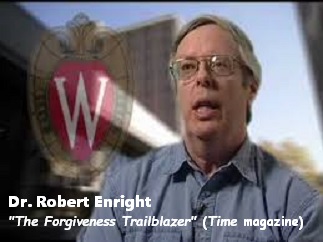
Dr. Enright’s team, composed of 16 experienced researchers who collected data from 595 study participants in three different geographic and cultural settings of the world, developed and confirmed the veracity of a totally new measure of intergroup forgiveness—The Enright Group Forgiveness Inventory (EGFI). Additionally, the team created and piloted a unique group administration process that operationalized the EGFI in a structured way.
“Our concept of intergroup forgiveness for this study was rooted in what groups, as opposed to the individuals who compose them, have the capacity to do,” says Dr. Enright, a professor of Educational Psychology at the University of Wisconsin-Madison and co-founder of the International Forgiveness Institute. “The study supported the conclusion that this new measure had strong internal consistency, as well as convergent and discriminant validity.”
In other words, to paraphrase Dr. Enright’s synopsis of the EGFI, it works. That is the conclusion reached by Dr. Enright’s 16-member research team in their study report, Measuring Intergroup Forgiveness: The Enright Group Forgiveness Inventory. The study was published earlier this year in Peace and Conflict Studies Journal (Vol. 27, No. 1), as the lead article for that issue of the journal.
To realistically test the measure, the team selected groups of people within countries that have historical conflicts that remain salient today. One group of participants was recruited from Asia with subsamples from Mainland China and from Taiwan. Another group of participants was recruited from Slovenia that contained subsamples from two different political parties with a history of violence toward each other. A third group of participants was recruited from the United States with subsamples that included a group of White Caucasian participants and a group of African American participants.
The new Inventory has 56 items across seven subscales and each subscale has eight items. Those subscales measure a group’s motivation and values regarding forgiveness, peace, and friendliness toward the other group. Similar to the Enright Forgiveness Inventory (EFI)—developed in 1995 and now the worldwide measurement tool of choice for assessing one person’s forgiveness of another—the EGFI has five questions at the end of the scale that are intended to assess pseudo-group-forgiveness or false forgiveness.
For this study, the inventory was translated into Mandarin Chinese and Slovene by native speakers of each language. The Inventory was then administered and assessed with individual participants as well as with the designated groups of participants. That strategy allowed the project team to compare a group-based assessment of forgiveness with traditional self-report assessment of forgiveness.
That assessment was a crucial element of this latest study because the bulk of past research has simply extended measures of forgiveness between individuals to groups. In fact, Dr. Enright et al. produced a study in January 2015 (Journal of Peace Psychology) entitled “Examining Group Forgiveness: Conceptual and Empirical Issues” that was one of the first to propose: 1) a benchmark definition of group forgiveness; and, 2) specific concepts for developing a group forgiveness measuring tool.
Incorporating that earlier work, the newly-developed EGFI scale of intergroup forgiveness is based on a definition of forgiveness between groups and is operationalized using group behaviors rather than individual cognition and emotion.
“Our findings suggest the EGFI is a reliable and valid measure of intergroup forgiveness,” the study group concludes in its final report. “This new measure can facilitate the work of peace advocates and researchers.” The study also indicates the Inventory could be used to:
- Assess where and when to intervene with conflicting groups;
- Evaluate the effectiveness of conflict resolution efforts;
- Assess where groups have been unjust to one another and, therefore, where they could benefit from conflict reduction efforts;
- Assess group forgiveness interventions;
- Evaluate progress when groups go through interventions such as peace and reconciliation commissions;
- Assess change in forgiveness from pre to post intervention; and,
- Advance our understanding of effective interventions.
Meet the Group Forgiveness Study Team:
- Robert D. Enright, University of Wisconsin-Madison and International Forgiveness Institute
- Julie Johnson, University of Wisconsin-Madison
- Matthew Hirshberg, University of Wisconsin-Madison
- John Klatt, University of Wisconsin-Madison
- Benjamin Boateng, University of Wisconsin-Madison
- Preston Boggs, University of Wisconsin-Madison
- Chelsea Olson, University of Wisconsin-Madison
- Peiying Wu, University of Wisconsin-Madison
- Baoyu Zhang, University of Wisconsin-Madison
- Fu Na, Beijing Normal University – Beijing, China
- Mei Ling Shu, Beijing Normal University – Beijing China
- Tomaz Erzar, University of Ljubljana – Ljubljana, Slovenia
- Tina Huang, National Chung-Cheng University – Taiwan (officially the Republic of China)
- Tung-En Hsiao, National Chung-Cheng University – Taiwan
- Chansoon (Danielle) Lee, National Council of State Boards of Nursing – Chicago, IL
- Jacqueline Song, International Forgiveness Institute, Madison, WI (native of the Philippines)

The Handbook of Forgiveness Covers All the Bases
A recently-published compilation of forgiveness research being called “the authoritative resource on the field of forgiveness” includes an appraisal of Dr. Robert Enright’s Process Model of Forgiveness—the four-phase procedure now being used and recommended worldwide as “the pathway to forgiveness.”
The Handbook of Forgiveness, Second Edition, consolidates research from a wide range of disciplines and offers an in-depth review of the science of forgiveness. The 394-page book includes 28 pages of references to forgiveness research evaluations and a 16-page index listing virtually every imaginable topic on the subject. It is edited by well-known forgiveness researchers Everett L. Worthington, Jr. (Virginia Commonwealth University), and Nathaniel G. Wade (Iowa State University).
Chapter 25 of the 32-chapter anthology is entitled “A Review of the Empirical Research Using Enright’s Process Model of Interpersonal Forgiveness.” It is authored by Dr. Suzanne Freedman (University of Northern Iowa) and Dr. Enright who have a long history of collaborative forgiveness exploration. The review chapter describes the Process Model, provides a summary of the empirical (verifiable) findings, and details the latest application of the model: forgiveness education with children and adolescents.
The Process Model of Forgiveness was first outlined by Dr. Enright and the Human Development Study Group in 1991. It was first empirically tested in 1993 by Dr. Enright and fellow-researcher Msgr. John Hebl. Through randomized experimental and control group clinical trials, the Process Model has shown to improve emotional well-being in multiple settings across diverse cultures around the globe.
“For information ranging from the biological roots to the psychological fruits of forgiveness,this is, hands down, the single-stop, go-to source.”
David Myers, Hope College (Holland, Michigan)
Co-author, Psychology (12th Edition) and Social Psychology (13th Edition)
The Handbook of Forgiveness also includes a chapter written by John Klatt (University of Wisconsin-Madison) and two researchers from the Federal University of Paraíba (in the city of João Pessoa, Paraíba, Brazil)–Eloá Losano de Abreu and Julio Rique. That chapter is an 11-page review of forgiveness philosophies, concepts and practices in South America and Latin America. Dr. Enright has co-authored numerous multi-national forgiveness research projects with both Klatt and Rique.
For additional information:
- Learn about the Enright Process Model of Forgiveness
- Preview The Handbook of Forgiveness including the Table of Contents and abstracts of all 32 chapters
- Read editorial reviews of The Handbook of Forgiveness
- Read more about Dr. Freedman and her forgiveness research
The Value of Forgiveness
“2020 brought plenty to be angry about. There’s been a global pandemic, a national reckoning with racial injustice, an economic crisis and a presidential election – all of it debated each day on social media. But University of Northern Iowa (UNI) education professor Suzanne Freedman, who has specialized in forgiveness research over nearly three decades, says now may be a good time to remember the benefits of forgiveness, empathy and understanding.”
EDITOR’S NOTE: Offsetting his dreary assessment of this unusual year with a final note of optimism, writer Steve Schmadeke used the paragraph above to set the stage for an informative article about the benefits of forgiveness that was printed last week in the online periodical INSIDE UNI. The article featured the forgiveness philosophy of Dr. Suzanne Freedman, a UNI professor of human development who is also a former graduate student and long-time research associate of Dr. Robert Enright, founder of the International Forgiveness Institute. Here are some of Dr. Freedman’s pronouncements as quoted in the UNI article:
What are the benefits of forgiveness?
I am often asked, “Why should I forgive?” and my response is always the same: “What’s the alternative?” Although forgiveness cannot undo the injury or damage, it allows us to move forward in our lives free from the negative effects of anger, hatred and resentment. It offers us a way to heal while still acknowledging that what happened to us was wrong, unfair and extremely hurtful.
Research has found that benefits of forgiveness for children, adolescents and adults include greater psychological and physical well-being, including decreases in anger, anxiety and depression. It also shows increases in hope, self-esteem, feelings of peace, improved relationships and academic achievement for students in school, as well as decreases in blood pressure, headaches and stress.
How does forgiveness deal with anger?
We have a right to feel resentment and anger. Many people criticize forgiveness because they mistakenly believe that anger is not part of the process. In fact, the opposite is true. We need to express our anger before we can forgive. Forgiveness involves admitting that one has been hurt, working through the feelings related to that hurt and then moving beyond them. The other important point is that the offender does not deserve our compassion because of their hurtful actions. However, we give it nevertheless.
Is self-forgiveness a real thing?
Self-forgiveness is a real thing. We have a model of self-forgiveness that is similar to our model of forgiving another. Self-forgiveness occurs when we have to forgive oneself for committing a deep, personal and unfair hurt. However, like in forgiving others, it occurs in the context of deep, personal and unfair hurt.
This can be hurt you have suffered due to your own actions. People who find self-forgiveness may be less likely to engage in self-destructive behavior or even hurt others.
Our society needs to do a better job of helping people realize that they can move on from their worst pains or actions. When individuals view themselves from the lens of only their hurtful behavior, they are not recognizing the fact that all human beings have inherent worth. Forgiving yourself will make it easier for individuals to become more forgiving of others, too.
Read the full UNI article: The Value of Forgiveness

ABOUT DR. SUZANNE FREEDMAN:
A professor of human development at the University of Northern Iowa, Dr. Freedman earned both her Masters Degree and Ph.D. from the University of Wisconsin-Madison where she studied under and conducted research with Dr. Robert Enright. Her dissertation was a landmark study that was published in the Journal of Consulting and Clinical Psychology: Forgiveness as an Intervention Goal with Incest Survivors.
At the University of Northern Iowa, Dr. Freedman teaches a variety of development courses including Studies in Forgiveness–an online, continuing education course designed primarily for upper-class psychology, counseling, and clinical students preparing to work with clients as helping professionals.
Dr. Freedman can be reached at freedman@uni.edu
MORE FORGIVENESS COMMENTARY FROM DR. FREEDMAN:
- Kids Say the Darndest Things — About Forgiveness
- The Impact of Using Children’s Literature to Teach 5th Graders About Forgiveness
- Forgiveness: The Path to Restoring Your Emotional and Physical Health After Sexual Abuse
- The “F Word” for Sexual Abuse Survivors: Is Forgiveness Possible?
- It’s Okay to Not Be Okay: The Importance of Admitting and Expressing One’s Painful Emotions in Everyday Life and When Forgiving