IFI News
The Role of Forgiveness in the Process of Healing
Rome, Italy – At the direction of Pope Francis himself, 190 of the Catholic Church’s highest-ranking officials gathered at the Vatican in Rome last month for a 4-day meeting on “The Protection of Minors in the Church.” Participants included 114 presidents of bishops’ conferences or their delegates, representatives from 14 Eastern churches in communion with Rome, female and male leaders of religious orders, the chiefs of several Vatican congregations, victim advocates, and others.After an introduction by the Holy Father, the very first keynote speaker at the meeting addressed what the Church–particularly those in attendance–must do to help the victims heal from the effects of the abuse they endured: implement the healing process developed and scientifically-tested by Dr. Robert Enright, of the University of Wisconsin-Madison and the International Forgiveness Institute, Inc. in Madison, Wisconsin.
“For this portion of my presentation, I will rely heavily on Dr. Robert Enright, professor at the University of Wisconsin-Madison in the United States, and the pioneer in the social scientific study of forgiveness,” said Cardinal Luis Antonio Tagle, Archbishop of Manila (Philippines). “We are collaborating with him on the programme of forgiveness in the Philippines. In fact, in this very moment there is a session among Catholic School Educators in Manila on “Pain, wound and forgiveness”.
“According to Dr. Enright,” Cardinal Tagle continued, “one concern that we must address is: Once justice is served, how do we help the victims to heal from the effects of the abuse? Justice is necessary but by itself does not heal the broken human heart. If we are to serve the victims and all those wounded by the crisis, we need to take seriously their wound of resentment and pain and the need for healing.”
Demonstrating his remarkable comprehension of Dr. Enright’s 20-Step pathway to healing, Cardinal Tagle added, “Resentment can be like a disease, that slowly and steadily infects people, until their enthusiasm and energy are gone. With increasing stress, they are prone to heightened anxiety and depression, lowered-self-images, and interpersonal conflicts that arise from the inner brokenness.
“Yet, before we even raise the issue of asking the victims to forgive as part of their healing, we must clarify that we are not suggesting that they should just let it all go, excuse the abuse, just move on. No. Far from it. Without question, we know that when victims come to a moment of forgiving others who have harmed them, a deeper healing takes place and the understandable resentments that build up in their hearts are reconciled. We know that forgiveness is one powerful and even scientifically supported pathway for eliminating pain, resentment and the human heart.
“We as the Church should continue to walk with those profoundly wounded by abuse building trust, providing unconditional love, and repeatedly asking for forgiveness in the full recognition that we do not deserve that forgiveness in the order of justice but can only receive it when it is bestowed as gift and grace in the process of healing.”
In an interview with America: The Jesuit Review following Cardinal Tagle’s talk, Dr. Enright said his research has found that survivors of trauma, including sexual abuse, report lower rates of depression when they include forgiveness in their healing process.
“Injustice is a wound,” Dr. Enright said, “but what happens after that wound is ever greater woundedness. The injustice leads to lots of complications, and the basic complication is what I’ve come to call resentment–resentment that can manifest itself years later in depression, anxiety and other mental health challenges.
While forgiving the offender can help those suffering from the fallout of trauma, Dr. Enright cautioned that forgiveness can never be expected from those who experience abuse, merely offered as a choice.
“It is not excusing; it is not forgetting; it is not throwing justice under the bus; it may or may not be reconciling,” he said.
According to Vatican News, the goal of the Feb. 21-24 meeting at the Vatican was “that all of the Bishops clearly understand what they need to do to prevent and combat the worldwide problem of the sexual abuse of minors. Pope Francis knows that a global problem can only be resolved with a global response.”
The 61-year-old Cardinal Tagle has been the Archbishop of Manila (where he was born) since December 12, 2011, and became a cardinal less than a year later. He has worked with Dr. Enright, co-founder of the International Forgiveness Institute (IFI), since the two met at the Jerusalem Conference on Forgiveness, organized by the IFI in July, 2017.
Cardinal Tagle is personally leading an initiative in the Philippines to establish Forgiveness Education Programs in every Catholic school throughout the country’s more than 7,000 East Asian islands. Curriculum Guides developed by Dr. Enright for students in pre-k through 12th grade will form the foundation of those programs.♥
Read the full text of Cardinal Tagle’s presentation – The Smell of the Sheep: Knowing their pain and healing their wounds is at the core of the shepherd’s task.
Learn more:
1) Dr. Enright’s Forgiveness and Forgiveness Education Programs:
- 20-Step Forgiveness Healing Process
- Forgiveness Education and Therapy
- Forgiveness Education Curriculum Guides
2) The Protection of Minors in the Church:
- Feb. 21 – Feb. 24 Daily Program
- List of All Participants
- Text of All Presentations (plus the concluding speech by Pope Francis – in your choice of 8 languages)
Dr. Enright Shares Forgiveness News with Audiences Around the World
The man Time magazine called “the forgiveness trailblazer” because of his groundbreaking forgiveness research, has just returned from a five-week international speaking tour during which he provided specialized forgiveness workshops and presentations to such diverse audiences as prison administrators and correctional facility innovators, cancer doctors and oncology specialists, and educational pioneers.

Dr. Robert Enright
Dr. Robert Enright, forgiveness researcher and educator who co-founded the International Forgiveness Institute, travels globally twice per year to respond to at least a handful of the innumerable requests that flow into his office on an almost daily basis.
In addition to private meetings in some of the more than 30 countries where he has helped establish elementary and high school Forgiveness Education Programs in the past few years, his formal presentation schedule on this most-recent tour included stops at Ramat Gan, Israel; Bratislava, Slovakia; and Belfast, Northern Ireland.
Those presentations included:
- “Forgiveness Therapy for The Imprisoned: From Practice to Research Outcomes” on January 9 during the Restorative Justice, Forgiveness, and Prisoners Conference at Bar Ilan University in Ramat Gan, Israel–a short distance from Tel Aviv.
- “Forgiveness Therapy for Patients with Multiple Myeloma and Other Blood Cancers,” on Jan. 16 (World Cancer Day 2019) during the Sympozium Integrativna Onkologia at the Slovak Academy of Sciences in Bratislava–the capital of the Slovak Republic.
- “Forgiveness Education for Our Students” on Feb. 1 during the 12-day forgiveness-focused extravaganza in Belfast, Northern Ireland called the 4Corners Festival that ran from Jan. 30 through Feb. 10. The theme for the 2019 Festival was “Scandalous Forgiveness.” Dr. Enright selected Belfast as the first city in which he would test his forgiveness education curriculum methodology. That was 17-years ago and the Program continues to this day.♥
Read More:
- “Presentations Around the World Focus on Forgiveness” – Additional details, graphics and photos related to Dr. Enright’s most-recent world tour.
- “UW-Madison’s Enright delivers presentations about forgiveness work at conferences overseas” – An article on the University of Wisconsin-Madison School of Education website. Dr. Enright is a psychology professor with UW-Madison’s Dept. of Educational Psychology which has been named as the top program in its field in U.S. News & World Report‘s 2019 Best Graduate Schools ranking for 7 of the last 8 years.
- “Forgiveness Therapy for Patients with Multiple Myeloma and Other Blood Cancers” – Dr. Enright’s slide presentation for his workshop in Bratislava, Slovakia.
- “Opening the Door to Forgiveness” – A UW law program brings the victims of violent crimes face-to-face with the people who hurt them, proving that human compassion resides in the most unlikely places; On Wisconsin magazine.
Kids Say the Darndest Things – About Forgiveness
Art Linkletter was a Canadian-born entertainer whose CBS radio and television show called House Party first aired shortly after the end of World War II and ran 5-days per week continuously for more than 25 years. The show’s best-remembered segment was a feature called “Kids Say the Darndest Things” in which Linkletter interviewed schoolchildren whose candid remarks provided some of his shows most precious, and hilarious, moments.
Like Linkletter, educational psychology professor Dr. Suzanne Freedman gathered lots of cute and insightful anecdotes when she recently taught two classes of 5th graders about inherent worth, moral love, kindness, respect, and generosity—the five basic components of forgiveness. Here are some of their unedited comments:
- Forgiveness has made me more calm and given me more chances in life instead of death.
- We are all the same when we take our skin off.
- Don’t be mean to others. Even if people you know are mean to you, you can still be nice to them.
- Forgiveness is one step closer to healing. When you forgive you can put it in the past.
- I like forgiveness because it taught us how to not wait till it’s too late to forgive.
- Forgiveness helped me be nicer to my brother and friends.
During the 27-year run of “Kids Say the Darndest Things,” Linkletter interviewed an estimated 23,000 children. The popularity of the segment led to a TV series with the same title, seven books (including Linkletter’s first book by the same title), spin-off TV shows in seven countries, and a number one record hit by country music superstar Tammy Wynette called “Kids Say the Darndest Things.”
On one of his more inspirational programs, Linkletter asked a four-year old if she knew how to pray. She immediately began saying the Our Father which included this nugget: “And forgive us our trash baskets as we forgive those who put trash in our baskets.”
Here are more of the darndest things kids like that little girl told Dr. Freedman:
- You could always give a person that is mean to you a second chance because maybe the person that is being mean is having a bad day or got in an argument with their best friend.
- Even though somebody is being mean to you, you could still forgive them.
- It doesn’t matter if you are a different religion or have different colored eyes because everyone is the same person underneath.
- When you have empathy you want to know how they feel and then you can put your feet in their shoes, and if you are getting bullied you can turn them into a friend by knowing how they feel.
- Revenge is not part of forgiveness.
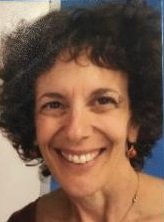
Dr. Suzanne Freedman
Dr. Freedman, a professor at the University of Northern Iowa in Cedar Falls, Iowa, gathered those anecdotes while conducting a forgiveness education research project with two classes of 5th grade elementary school students attending a low-income school in a Midwestern community. She instructed each class for one 30-minute lesson each week for 10 weeks with two days of pre-testing and two days of post-testing. Each class was composed of 25 ten- and eleven-year-old students representing a diverse group of races and ethnicities.
The forgiveness education curriculum that Dr. Freedman used with those students was based on the four phases of Dr. Robert Enright’s scientifically-proven 20-unit process model and used children’s literature to illustrate the basic components of forgiveness. Dr. Freedman studied under and conducted research with Dr. Enright while earning her Masters Degree and Ph.D. from the University of Wisconsin-Madison. Her dissertation was a landmark study that was published in the Journal of Consulting and Clinical Psychology on Forgiveness with Incest Survivors.
Quantitative results from Dr. Freedman’s research project demonstrated that students increased significantly in their forgiveness toward a specific offender and showed significant increases in their knowledge of forgiveness from pre-test to post-test.
Qualitative results from the study illustrated that students both enjoyed  and benefited from the forgiveness education curriculum. Specifically, when asked what they learned about forgiveness education, 14 students reported that the forgiveness education “helped them learn to forgive someone.” Other comments included: “I like forgiveness because in the future we will meet other people that we do not like but we still need to forgive them;” and; “It helps me forgive people when they make bad choices.”
“This study illustrates the potential of forgiveness education to improve elementary school students’ psychological well-being and interpersonal relations as well as the importance of including forgiveness education in the school curriculum,” according to Dr. Freedman.
“Students who learn how to forgive and decrease their anger in healthy ways will be less likely to be involved in bullying and other violent acts. This research is encouraging and needs to be replicated with additional populations of children and adolescents.”
One could add that the study proves kids do indeed say the darndest things. . .♥
Read More:
- Dr. Freedman’s guest blog and her personal comments about her forgiveness research with 5th Graders.
- The Impact of Using Children’s Literature to Teach 5th Graders about Forgiveness–the unedited full study.
- Dr. Freedman’s full Curriculum Vita.
Editor’s Note: Art Linkletter had a degree in teaching and was the author of 17 books. He was married to his wife Lois for nearly 75 years and he died in 2010 at the age of 97.
“CE Course Bridges Gap Between Forgiveness Theory and Theology”
Editor’s Note: We asked a recent graduate of our Online Forgiveness Education Course to tell us about his experience with the “Forgiveness Therapy” course. Here is the response from Randy Miota, Manager of Chaplaincy Services, Spectrum Health Lakeland, St. Joseph, MI, USA:
“This Forgiveness Therapy CE course has been one of the most challenging educational efforts I have been able to finish. ‘Finish’ in the sense that I completed the assignments. However, I refer back to the book and the chapter summaries when I run into situations that involve anger, and therefore (potentially) forgiveness.
“At first, I thought that I was most challenged by having to recall and remember the counseling and psychological concepts and practices that we learn and integrate into healthcare chaplaincy. Then, I realized that this non-theological approach to understanding and practicing forgiveness necessarily has to address some basic theological concepts – such as right and wrong, moral thought and action, and moral character that some will say points to the character of a transcendent God, etc.
“This course has also challenged me to face and to encourage others to face the painful interactional/social nature of how we live. Most of our hurts come from others, and facing that and trying to make that better takes work and courage. In other words, I hear so many people talk of having to forgive themselves for how they have failed themselves. I wonder if this is be a way of avoiding having to face the hurt, anger, and deep sadness that can be dealt with through courageous self-examination, confrontation with others, the willingness to risk disappointment and “non-closure,” and to keep growing and maturing.

Overall, as a healthcare chaplain and a clergy person, the Forgiveness Therapy course equips me to think about and to work with forgiveness in a practical way that bridges the gap between the theology and theory and the everyday need for many to start to do something more constructive with their anger.”
Forgiveness Therapy, the online CE Course, is based on the book by the same title written by psychologist Dr. Robert Enright and psychiatrist Dr. Richard Fitzgibbons, director of the Institute for Marital Healing outside Philadelphia, PA. The 15-lesson course was developed by Dr. Enright and Dr. Elizabeth Gassin, Professor of Educational Psychology at Olivet Nazarene University, Bourbonnais, IL. Although primarily designed for licensed psychologists, the course has also proven beneficial for ministers, psychiatrists, social workers, nurses, and other professional counselors who have completed it.
The International Forgiveness Institute is approved by the American Psychological Association to sponsor continuing education for psychologists. The International Forgiveness Institute maintains responsibility for this program and its content.
Learn more at Forgiveness Therapy.
Presentations Around the World Focus on Forgiveness
Dr. Robert Enright boarded an international jetliner today to take his scientifically-verified Forgiveness Therapy and Education programs onto the world stage as he does at the start of each New Year. The 2019 excursion includes presentations and working sessions in Israel, the Philippines, Slovakia, and Northern Ireland.
Forgiveness Therapy for the Imprisoned in Israel
The founder of the International Forgiveness Institute (IFI), Dr. Enright kicks off his formal presentations on January 9 during the Restorative Justice, Forgiveness, and Prisoners Conference at Bar Ilan University in Ramat Gan, Israel–a 25-minute bus ride from Tel Aviv on Israel’s Mediterranean coast. His talk will be entitled, “Forgiveness Therapy for the Imprisoned.”
Bar Ilan University is the largest, the fastest growing, and one of the highest-rated academic institutions in Israel with more than 32,000 students. It has a well-respected history of involvement with with criminal justice initiatives, is a member of the International Institute for Restorative Practices, and hosted the 2006 International Conference on Violence and Restorative Justice.
Dr. Enright was asked to be a keynote speaker at the Israeli conference because of the success his forgiveness therapy methodologies have had when adapted for use with inmates in maximum-security prisons over the past five years.
“Forgiveness therapy is beginning to gain traction in prisons because counselors are beginning to see that it is one of the few approaches to corrections that actually works,” Dr. Enright wrote in a recent blog post entitled Reflections from Prison: “Forgiveness Saved my Life.”
“For many prisoners, the abuse an inmate typically experienced as a young man turned to a poisonous anger which was destroying him and his life,” Dr. Enright explains. “Through forgiveness therapy, the heart softens toward those who are cruel and one’s own inner poisons find an antidote in growing compassion. And it works.”
Forgiveness Therapy for Patients with Blood Cancers in Slovakia
Seven days after his discussions at Bar Ilan University, Dr. Enright switches forgiveness gears with a presentation on Jan.16 entitled, “Forgiveness Therapy for Patients with Blood Cancers” to physicians and health researchers in Bratislava, Slovakia–-the capital of the Slovak Republic, which is also referred to as the “Beauty on the Danube.”
While that location in central Europe may seem like an unusual spot for a talk on cancer, it actually makes perfect sense because of work done by internationally-known organizations in Slovakia like the Cancer Research Institute of the Slovak Academy of Sciences and the St. Elizabeth Cancer Institute Hospital, both in Bratislava.
Additionally, cancer survival rates in Slovakia are significantly lower than those of most other European Union member states. That makes physicians there anxious to dialogue with Dr. Enright about his research on the improved well-being of cancer patients who have significantly reduced their anger through forgiveness–research he first started in 2008 with elderly terminally-ill cancer patients.
“There is evidence to show that suppressed anger can be a precursor to the development of cancer, and also a factor in its progression after diagnosis,” according to ground-breaking research done by Groer, Davis, Droppleman, Mozingo, and Pierce (2000). Follow-up research on unhealthy anger by Dr. Enright and Dr. Richard Fitzgibbons (2015), as well as others, has confirmed the apparent connection.
“Perhaps it is time for both medicine and psychology to unite in a new angle in the fight against certain cancers by continuing to examine the anger-cancer link,” Dr. Enright wrote in his blog “Finding ways of reducing anger may be part of a regimen for cancer prevention and treatment.”
In fact, the five hospitals operated by Cancer Treatment Centers of America (CTCA) now incorporate forgiveness therapy into their treatment regimen. Unforgiveness makes people sick and keeps them sick,” according to Dr. Steven Standiford, CTCA cancer surgeon.
“Anyone can get cancer. So make peace with yourself and others,” explains Rev. LaWanda Long, MDiv, Chaplain at CTCA Atlanta. “Forgive others and let go of past hurts and offenses. You do not have time to continue to invest in emotional pain that may be draining you spiritually. Let it go. Forgive and live.”
17 Years of Forgiveness Education for Belfast Students
Before returning to the US in early February, Dr. Enright will once more shift forgiveness gears by conducting a half-day workshop for educators in Belfast, Northern Ireland. “Forgiveness Education for Our Students” will focus on the forgiveness curriculum guides he has developed for students in pre-kindergarten through 12th grade which have been used continuously in many Belfast schools since Dr. Enright established his first program there 17 years ago.
That workshop is just one small part of a 12-day forgiveness-focused extravaganza in Belfast called the 4Corners Festival that runs from Jan. 30 through Feb. 10. The theme for the 2019 Festival is “Scandalous Forgiveness.” According to the event website, the Festival, “seeks to inspire people from across the city to transform it for the peace and prosperity of all. It consists of innovative events designed to entice people out of their own ‘corners’ of the city and into new places where they will encounter new perspectives, new ideas, and new friends.”The 2019 event will be the city’s 7th annual Festival. It includes a range of events featuring discussion, music, prayer, drama, poetry and story-telling in venues across the city of Belfast. The Festival was conceived by a group of Christians who wanted to promote unity and reconciliation in the midst of the city’s troubled past.
The widely-known “Troubles” in Northern Ireland during the late 20th century resulted in more than 3,600 deaths with thousands more injured during 30-years of conflict. Because of the past animosity between Catholics and Protestants in Northern Ireland, Dr. Enright selected Belfast as the first city in which he would test his forgiveness education curriculum methodology. That was 17-years ago and the Program continues to this day.
Today, Dr. Enright’s school-based forgiveness programs are operating not only in Northern Ireland, but also in the US, and in more than 30 other countries around the world. Those programs have been repeatedly tested and scientifically-supported. A recent research project with middle school students in Korea, for example, concluded that:
“The Forgiveness Education Program helped these students reduce in anger and hostile attribution, and increase in empathy. Their academic grades improved and they reduced in behavioral aggression and delinquency.”
Additional stops on Dr. Enright’s tour include: 1) Manila, the capital of the Philippines–a tropical Southeast Asian country composed of more than 7,100 islands that are home to more than 98 million people–where he will meet with non-profit and religious leaders who are proposing to expand Forgiveness Education throughout the country from its current base in Manila and neighboring Quezon City; and, 2) While in Israel, he will visit with educators in Bethlehem and the West Bank where the IFI established a program last year that teaches forgiveness to both Christian and Muslim students and young adults.♥
Additional Information:
- Read an unsolicited article written by an inmate in the Columbia Correctional Institution at Portage, Wisconsin, who says the Forgiveness Education program “is the best program I have ever been associated with. . .” Prison Inmate Tames Anger Through Forgiveness.
- Watch a short video about the amazing power forgiveness has had on one woman’s life and her battle with cancer. “If I hadn’t learned to forgive,” says Jayne Valseca, a CTCA cancer patient who was essentially given a death sentence, “I may not even be alive today.” Watch the video here.
- Read Dr. Enright’s blog in Psychology Today: “Anger and Cancer: Is There a Relationship?”
- Read about Dr. Enright’s work with the University of Wisconsin-Carbone Cancer Center, “The Amazing Benefits of Forgiveness Therapy on Cancer Patients.”
- Read Dr. Enright’s Eight Principles Underlying Forgiveness Education that he builds into each of his programs all around the world.