
Tagged: “hurtful event”
If we do not forgive situations, such as a tornado that was destructive, how can we aid children in feeling safe after something like this occurs? In other words, how then can we avoid post-traumatic feelings in the child?
You can work on two issues. The first is acceptance of what happened. This can take time, but it may help children learn that this is an imperfect world and so bad things do happen. The second is to work on what I call “the safe feeling,” which is a sense of being protected by parents and other loved ones. Of course, the “safe feeling” should not become an illusion that bad things will not happen. Working simultaneously on acceptance that bad things can happen, and that loved ones are here to assist, may help the child reduce any post-traumatic stress that has emerged.
Consider Giving the Gift of Forgiveness This Year
In the season of giving, one of the most beautiful gifts you might consider giving is forgiveness. The ideas that forgiving is a gift to those who have hurt you sometimes gets forgiveness into trouble. In other words, people think it is irrational to consider offering a gift to those who are unfair. The typical reasons for this resistance to forgiveness as gift-giving are these:
- It is dangerous to reach out to those who act unfairly because I am open to further abuse.
- My gift-giving might be a signal to the misbehaving others that their actions are acceptable, which they are not.
- Gift-giving to those who acted unfairly seems counter-intuitive to my own healing. I need to move on and not focus on this other person.
 The ideas above can be countered this way: With regard to (A), you do not necessarily have to reconcile with an unrepentant person who keeps harming you. You can give your gift from a distance, such as a kind word about the person to others or an email so that you can keep your distance if this is prudent to do so. With regard to (B), you can forgive and ask for justice. Forgiving never means that the other just goes ahead as usual with hurtful behaviors. In other words, if you decide to forgive, you can and should ask for fairness from the other person. With regard to (C), forgiveness will seem counter-intuitive as goodness to those who are not good to you only if your focus is entirely on justice or a fair solution to the problem. If you begin to see that mercy (in the form of forgiving) and justice can and should exist side-by-side, then perhaps this idea of forgiveness as a contradiction or as inappropriate or as somehow odd may lessen in you.
Forgiveness can be a gift in these ways:
- As you forgive, you are giving the other person a second chance at a trustworthy relationship with you. Of course, trust takes time to develop, but forgiveness opens the door, even if a little, to trying the trust-route with the other who behaved unjustly.
- Forgiveness can be a merciful way of showing the other what the injustice actually is (or was), making possible positive change in the other. Those who behave badly and are offered this mercy may begin to see the unfairness more clearly and have the inner conviction that change indeed is necessary.
- Forgiveness can be a gift to yourself as you shed abiding anger that could have been yours for many years. You have a second-chance at stronger mental health.
- As you reduce toxic anger, this actually can be an aid in strengthening your relationships with people who were not the ones who acted badly. After all, when people carry around a lot of anger in their hearts, they can displace that anger onto unsuspecting others. Your forgiving one person, then, can be a gift to others who do not have to endure your displaced anger.
So, then, what do you think? Do you see that in the season of giving, one of the most beautiful gifts you might consider giving is forgiveness?

If we all use psychological defenses such as denial and repression, how do we ever come to realize who hurt us when that hurt occurred many years ago when we were children?
As people see that they are carrying deep hurt at present, this can be a motivation for examining who did the hurting in their lives. One exercise that I recommend in the book, The Forgiving Life, is what I call the Forgiveness Landscape. In this exercise, people slowly start to make a list of those who have actually hurt them, starting from early childhood and progressing up to the present time. As people do this exercise, they can begin to see areas of hurt that are long forgotten (but still subconsciously can be affecting a person’s well-being at present). For example, as people reflect on their past life, they might recall being bullied at age 11. This then breaks the repression that might have been present with regard to the bullying. This breaking of the psychological defenses can occur particularly when a person knows that forgiveness is an effective response to the past injustices and to the current hurts still present from those past offenses.
In an intimate relationship, how can one rebuild trust after the other shattered that trust?
Once you have walked the path of forgiving, I recommend an attempt at reconciliation. One can slowly rebuild trust with what I call the 3 R’s of remorse, repentance, and recompense. Remorse is an inner sorrow. Is the other genuinely sorry for what happened? Repentance is words that express remorse. Has the person genuinely apologized, truly meaning it (and you usually can tell a phony repentance from a sincere one by seeing the other’s emotions). Recompense is trying to make up for what happened, within reason. Has the other tried to change so that the injustices now are minimized or even eliminated? It can take time to see that recompense is occurring on a consistent level, but as you see this more stable change, trust can begin to emerge.
Healing Hearts Hero Award Presented to Rosemary Kite
Rosemary Kite, founder and president of Forgive4Peace (2008-2018), has been selected to receive the International Forgiveness Institute’s (IFI’s) Healing Hearts Hero award. The award recognizes individuals who have developed collaborative partnerships with the IFI and its co-founder Dr. Robert Enright in order to promote the virtue of forgiveness on an international basis.
Formerly called Possumus International, the organization was created in 2008 with what Rosemary calls “the desire to overcome evil through a superabundance of good. And what better good could be provided to the world than instruction on how to exercise mercy towards one another, bridging the way to peace by teaching the importance and value of forgiveness at home, at school, and at work.”
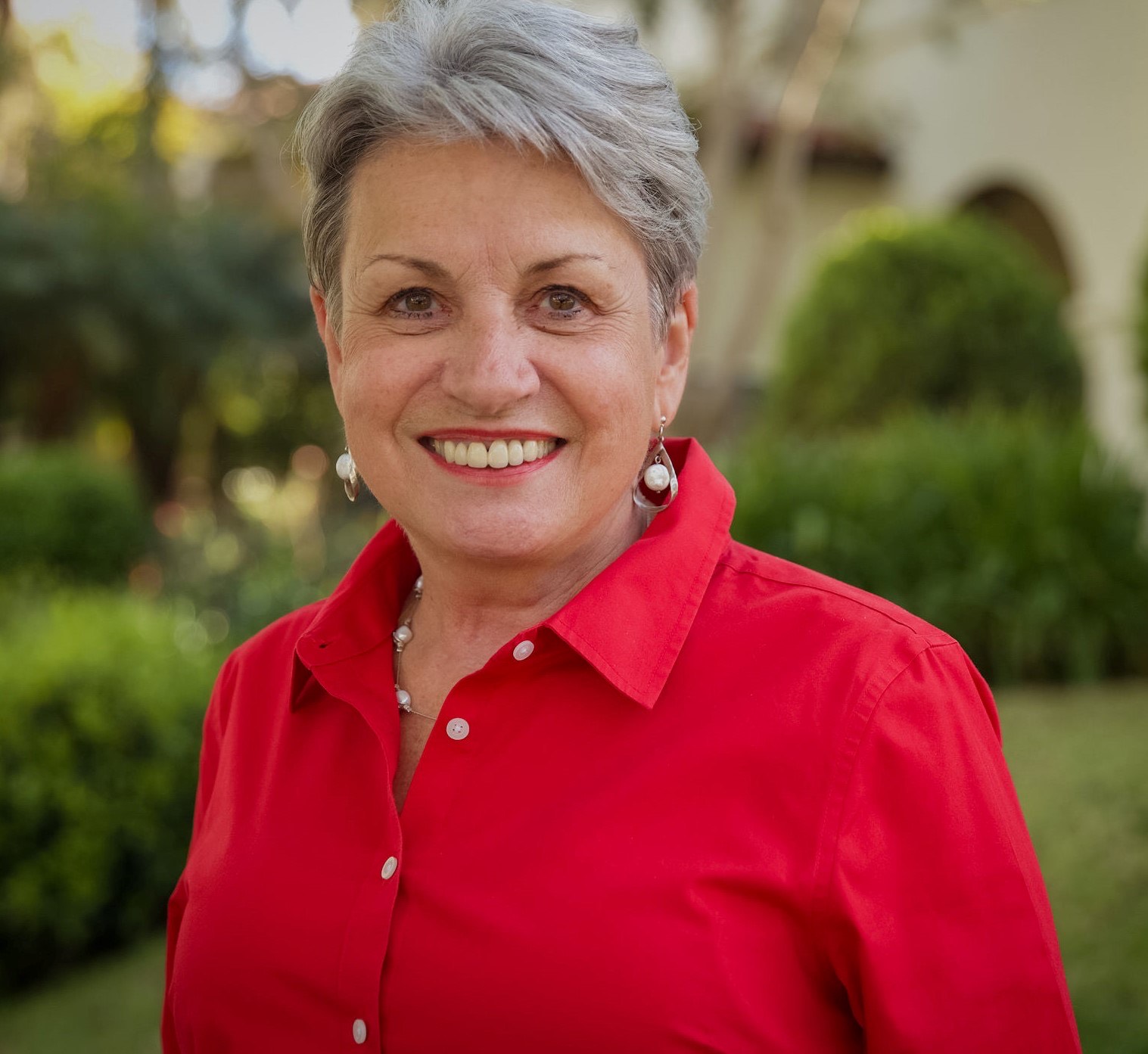
Rosemary Kite, founder of Forgive4Peace, has received the IFI’s “Healing Hearts Hero” award.
Shortly after its founding, Possumus International (Latin for the words “we can”) became a 2009 Charter Member of the National September 11th Memorial and Museum. Then Rosemary and her colleagues initiated an annual “Family, Friends and Forgiveness” essay competition for girls 10-14 years old with the winners awarded camp scholarships.
In 2013, after learning about and wanting to be a part of the empowering work of the IFI, Rosemary established a “Families and Forgiveness” program that incorporated lessons from Dr. Enright’s A Family Guide to Forgiveness Education into private home settings.
Since then, Rosemary and Dr. Enright have collaborated on school Forgiveness Education projects around the world including those in: 1) Inner City Milwaukee, Wisconsin; 2) Belfast, Northern Ireland; 3) Liberia, West Africa; and, 4) the West Bank, Israel.
Forgive4Peace provided financial support for two IFI-hosted events—the Jerusalem Conference on Forgiveness (2017) and the Rome Conference on Forgiveness (2018). In July, Rosemary was an active participant at the International Educational Conference on Agape Love and Forgiveness in Madison, WI, that was hosted by the IFI and attended by 160 educators from the US, Northern Ireland, Taiwan, Israel, Spain, and the Philippines.
 “Rosemary is a fabulous ambassador for forgiveness who has continually impressed me from the first day I met her,” according to Dr. Enright. “She is constantly trying to raise awareness of the importance and value of forgiveness in one’s everyday life. She definitely knows how to heal hearts through forgiveness.”
In her 2019 guest blog for this website, The Art and Science of Forgiveness, Rosemary wrote:
“The art and science of forgiveness suggests that the best medicine we can possibly take to improve our physical, psychological, social, and spiritual health, is forgiveness. Forgiveness is like the pill that offers the deepest healing of the wounds that fester in the human heart.”
Elsewhere she says: “As everyone who has ever had to forgive knows, every act of forgiveness begins with an injustice. We have wounded hearts all around us, everywhere we go. Why not try to be a healing heart to those we come across in our paths daily?”
Rosemary, who has a BA from California State University in San Francisco, has devoted her professional career to educational endeavors in the non-profit sector, primarily through the education of women and girls.