
Tagged: “hurtful event”
I forgave a betraying friend and yet I still suffer from sadness over this. What can I do to get rid of this?
Think of forgiveness as a process that can take time rather than a one-time decision. If you have a little sadness, this is normal. If, however, the sadness is deep and is interfering with your well-being, I suggest starting from the beginning and forgiving the friend again. Each time you practice forgiveness, some of the sadness may lessen. Again, please do not expect that forgiving will wipe away all feelings of sadness or even anger. If such symptoms are manageable for you, then you are advancing well in forgiving.
For additional information, see The Four Phases of Forgiveness.
Kids Say the Darndest Things – About Forgiveness
Art Linkletter was a Canadian-born entertainer whose CBS radio and television show called House Party first aired shortly after the end of World War II and ran 5-days per week continuously for more than 25 years. The show’s best-remembered segment was a feature called “Kids Say the Darndest Things” in which Linkletter interviewed schoolchildren whose candid remarks provided some of his shows most precious, and hilarious, moments.
Like Linkletter, educational psychology professor Dr. Suzanne Freedman gathered lots of cute and insightful anecdotes when she recently taught two classes of 5th graders about inherent worth, moral love, kindness, respect, and generosity—the five basic components of forgiveness. Here are some of their unedited comments:
- Forgiveness has made me more calm and given me more chances in life instead of death.
- We are all the same when we take our skin off.
- Don’t be mean to others. Even if people you know are mean to you, you can still be nice to them.
- Forgiveness is one step closer to healing. When you forgive you can put it in the past.
- I like forgiveness because it taught us how to not wait till it’s too late to forgive.
- Forgiveness helped me be nicer to my brother and friends.
During the 27-year run of “Kids Say the Darndest Things,” Linkletter interviewed an estimated 23,000 children. The popularity of the segment led to a TV series with the same title, seven books (including Linkletter’s first book by the same title), spin-off TV shows in seven countries, and a number one record hit by country music superstar Tammy Wynette called “Kids Say the Darndest Things.”
On one of his more inspirational programs, Linkletter asked a four-year old if she knew how to pray. She immediately began saying the Our Father which included this nugget: “And forgive us our trash baskets as we forgive those who put trash in our baskets.”
Here are more of the darndest things kids like that little girl told Dr. Freedman:
- You could always give a person that is mean to you a second chance because maybe the person that is being mean is having a bad day or got in an argument with their best friend.
- Even though somebody is being mean to you, you could still forgive them.
- It doesn’t matter if you are a different religion or have different colored eyes because everyone is the same person underneath.
- When you have empathy you want to know how they feel and then you can put your feet in their shoes, and if you are getting bullied you can turn them into a friend by knowing how they feel.
- Revenge is not part of forgiveness.
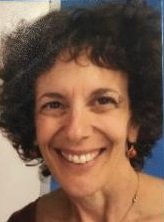
Dr. Suzanne Freedman
Dr. Freedman, a professor at the University of Northern Iowa in Cedar Falls, Iowa, gathered those anecdotes while conducting a forgiveness education research project with two classes of 5th grade elementary school students attending a low-income school in a Midwestern community. She instructed each class for one 30-minute lesson each week for 10 weeks with two days of pre-testing and two days of post-testing. Each class was composed of 25 ten- and eleven-year-old students representing a diverse group of races and ethnicities.
The forgiveness education curriculum that Dr. Freedman used with those students was based on the four phases of Dr. Robert Enright’s scientifically-proven 20-unit process model and used children’s literature to illustrate the basic components of forgiveness. Dr. Freedman studied under and conducted research with Dr. Enright while earning her Masters Degree and Ph.D. from the University of Wisconsin-Madison. Her dissertation was a landmark study that was published in the Journal of Consulting and Clinical Psychology on Forgiveness with Incest Survivors.
Quantitative results from Dr. Freedman’s research project demonstrated that students increased significantly in their forgiveness toward a specific offender and showed significant increases in their knowledge of forgiveness from pre-test to post-test.
Qualitative results from the study illustrated that students both enjoyed  and benefited from the forgiveness education curriculum. Specifically, when asked what they learned about forgiveness education, 14 students reported that the forgiveness education “helped them learn to forgive someone.” Other comments included: “I like forgiveness because in the future we will meet other people that we do not like but we still need to forgive them;” and; “It helps me forgive people when they make bad choices.”
“This study illustrates the potential of forgiveness education to improve elementary school students’ psychological well-being and interpersonal relations as well as the importance of including forgiveness education in the school curriculum,” according to Dr. Freedman.
“Students who learn how to forgive and decrease their anger in healthy ways will be less likely to be involved in bullying and other violent acts. This research is encouraging and needs to be replicated with additional populations of children and adolescents.”
One could add that the study proves kids do indeed say the darndest things. . .♥
Read More:
- Dr. Freedman’s guest blog and her personal comments about her forgiveness research with 5th Graders.
- The Impact of Using Children’s Literature to Teach 5th Graders about Forgiveness–the unedited full study.
- Dr. Freedman’s full Curriculum Vita.
Editor’s Note: Art Linkletter had a degree in teaching and was the author of 17 books. He was married to his wife Lois for nearly 75 years and he died in 2010 at the age of 97.
What is one major difference between forgiving other people and forgiving yourself?
When you forgive others, if you did nothing wrong, then you do not ask for forgiveness. When you forgive yourself, you usually offend others by what you did. Thus, self-forgiveness involves not only welcoming yourself back into the human community but also seeking forgiveness from others for hurting them by this particular action.
For additional information, see Self-Forgiveness.
I forgave someone a year ago, but I still have these random moments in which I feel some anger. What is my next step here?
When we forgive, the anger does not necessarily go away completely. This does not necessarily imply that you have not forgiven. Are you in control of that anger or is the anger controlling you? You say the anger comes “randomly.” How often does this happen? If it occurs infrequently, say once a month, then I think you have forgiven and are experiencing the natural and imperfect parts of being hurt and forgiving. If the anger is more intense and comes more frequently, say once a week, then I recommend going back through the forgiveness process with this person.
For additional information, see What is Forgiveness?
I Forgive the Man Who Killed My Son
Good Housekeeping (UK); London, England, UK – Figen Murray’s emotions were suspended in limbo for more than 24-hours after the Manchester Arena bombing before she was officially notified that her 29-year-old son Martyn Hett had been killed in the May 22, 2017, suicide bombing attack. Here is how she responded to his death, as reported in Good Housekeeping (UK), part of the Hearst UK Fashion & Beauty Network:
My son Martyn touched a lot of hearts. He was fun, kindhearted, and he always stood up for the underdog. As a child, he was a little imp, with boundless energy. He had a really quirky side, and loved practical jokes, social media and Coronation Street. . . .
Grief manifests itself in many different ways. I didn’t cry – I couldn’t. I’m a counsellor and psychotherapist, and for over 20 years I’ve spent my working life helping people through mental-health issues and psychological obstacles. In my professional career I developed resilience in order not to dissolve into tears in front of clients.
Now, I realise that this ingrained resilience is how I go on. I’m not being deliberately strong, and I’m not in denial. I’m undone inside, permanently damaged from what’s happened. The only way I can describe it is I feel like a piece of paper that someone has shredded, only to realise they’ve done so by accident. They try to tape it back together, but it’s too late. It can never be whole again.
When I saw the bomber’s face on television, the first thing I thought was, ‘You foolish boy’. That’s all he was – not a man, but a boy who had been brainwashed so much that he was able to walk into a crowded concert and detonate a bomb.
I could choose to be angry, to harbour resentment and blame. But I can honestly say that I feel no rage towards Salman Abedi. In that moment, he believed that he was doing the right thing. That’s why I’ve made a conscious choice to forgive him – hate only breeds hate. Now more than ever, this world needs humanity and kindness.
Out of bad, good has to happen. When that boy detonated the bomb, he achieved the opposite of what he wanted – he caused an explosion of love. Family, friends and strangers have come together in solidarity and courage.
Martyn’s death has changed my family for ever, but I will not allow it to destroy us. When the most awful, unthinkable things happen, we all have the power to overcome.
Figen Murray
Editor’s Note: In addition to Martyn Hett and the 21 others killed in the Ariana Grande concert bombing in Manchester, we now know that more than 800 people suffered physical and/or deep psychological injuries from the attack. Undoubtedly, their lives have been altered forever.
Read the full story in Good Housekeeping (UK)