Forgiveness News
Heroic Forgiveness in Recent Church Shooting

Photo by Liza Summer, Pexels.com
On September 28, 2025, Thomas Jacob Sanford drove his pickup truck through the front doors of the meetinghouse of the Church of Jesus Christ of Latter-day Saints during a worship service in Grand Blanc Township, Michigan. He opened fire with an assault rifle and then set the structure ablaze. Four people were killed and eight were wounded. He was killed in the parking lot by police. In the aftermath, at least six online fundraisers were started for the assailant’s widow and children. David Butler of Utah started a fundraising campaign that saw thousands of people donating. The fundraising efforts were not without their critics, who said that the victims’ families should be the recipients of the gifts. Yet, the gifts were a gesture of forgiveness, shown directly to the offending person’s family.
Does a Lack of Reconciliation Interfere with Emotional Healing Upon Forgiving?

Photo by Rohit Singh, Pexels.com
A small scale qualitative study in India with 12 young adults showed that even when reconciliation is not possible, there are psychological benefits for those who forgive once a relationship breaks down. The study is here:
Sengupta, Poulami, Vidisha Rai, and Atasi Mohanty. Forgive and forego? Exploring interpersonal forgiveness in non-reconciled relationships among young adults. Psychological Studies 70.1 (2025): 46-60.
Erika Kirk forgives Tyler Robinson
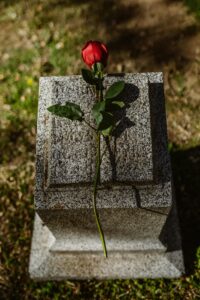
Photo by RDNE Stock project, Pexels.com
In Erika Kirk’s speech at the memorial service for her husband, Charlie Kirk, she proclaimed toward the one accused of firing the shot, “I forgive him.” She received a standing ovation in front of approximately 70,000 people when she made this statement. Shortly after this, one of the members of our International Forgiveness Institute appeared on a radio program to discuss forgiveness and was asked if such quick forgiveness is legitimate. The answer was that it is rare, but does occur. One example given was that of Corrie Ten Boom, as described in her book, The Hiding Place. She was imprisoned in a concentration camp during World War II. While in a church and following one of her talks emphasizing the need for forgiveness, an SS officer who abused her while she was held captive approached her, extended his hand, and asked for forgiveness. She prayed and felt an electrical charge go up her arm, and was overwhelmed with a love for the man. She was able to legitimately forgive him. Such forgiveness, whether from Erika or Corrie, does not mean that anger never resurfaces again. It can. Yet, a pathway of forgiveness already has been experienced, and so practicing it again may lead to deeper forgiveness as the person continues to work on this important moral virtue.
Self-Forgiveness Suggested for Health Care Providers Who Make Errors

Photo by Pixabay, Pexels.com
A recent study in the Journal of Child Health Care focuses on health care provides and the clinical errors that occur annually in Australia. The article reports that approximately 140,000 diagnostic errors occur annually. As one step in rectifying the inner psychological effects on the medical professionals who make such errors, the authors recommend self-forgiveness. The reference to this work is here:
Atkins K, Wisby L. Self-forgiveness as a professional value: Restoring integrity after clinical error. Journal of Child Health Care. 2025;29(1):5-9. doi:10.1177/13674935251318913
Forgiveness Therapy for Battered Women in Pakistan
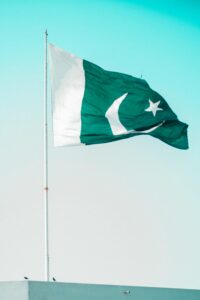
Photo by Talha Riaz, Pexels.com
A recent study led by Sana Nisar of the Government College University, Lahore, Pakistan found that a forgiveness intervention for 15 sessions, done one-on-one with the intervener, was effective. Following the intervention, those in the forgiveness condition, relative to those in the control group, had significant decreases in depression, anxiety, and anger and significant increases in forgiveness and hope relative to those in the control group. The reference to this work is this:
Nisar, S., Yu, L., Ifikhar, R., & Enright, R.D. (2025). Forgiveness therapy to build hope and reduce anxiety and depression in battered women in Pakistan. Clinical Psychology and Psychotherapy.doi: http://dx.doi.org/10.1002/cpp.70089