Tagged: “forgiveness is a choice”
What Does Forgiveness Entail?

Photo by Ann H, Pexels.com
On January 26, 2026, Richard Balkin, a professor at the University of Mississippi, published an article on the website The Conversation discussing forgiveness. In two places on the site, he defines forgiveness this way:
- “At its core, forgiveness is internal: a way of laying down ill will and our emotional burden……”
- “……forgiveness comes when we relinquish feelings of ill will toward another.”
Is this philosophically correct? We would say no because it is reductionistic, focusing on only half of the equation when it comes to the moral virtue of forgiveness. If forgiveness is a moral virtue, then, as a moral virtue, it concerns goodness toward others. More specifically, when it comes to forgiveness, the person is exercising goodness toward the one who behaved unjustly. This would involve not only the free-will attempt to reduce or eliminate “ill will” but also, to be more complete, its essence needs to include the struggle to offer positive feelings, thoughts, and behaviors toward the other person as well, even if the other is no longer in the forgiver’s life. In other words, even without reconciliation, a forgiver can speak well of the offending person to others. Reducing ill will and offering goodness captures the essence of forgiveness more accurately than the appropriation of either one alone.
The article can be read here:
Announcing a New Initiative: Families for Forgiveness Education
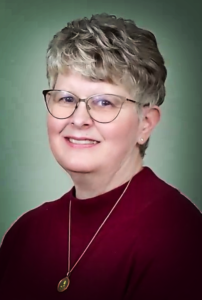
Mary Lou Coons
In conjunction with Mary Lou Coons, who runs the Puppets for Peace Foundation, we are launching a new initiative entitled Families for Forgiveness Education. The point of this effort is to encourage interested parents (or other adults in the family) to teach children and adolescents about forgiveness at home. The website for this is being built now.
Here is an excerpt from the website explaining the necessity for forgiveness education for children and adolescents:
We need to take the learning of forgiveness very seriously in our troubled world, so that adults are already schooled in the practice of this heroic and vital moral virtue. This is why we started Families for Forgiveness Education: to assist adults in families in passing on forgiveness to their children, and to equip them with the readiness to tackle the serious injustices they might face in adulthood.
The central points of Families for Forgiveness Education are these:
1. We are interested in the development of appreciation and practice of the virtue of forgiveness within the family as a whole, as well as within each person.
2. Forgiveness needs to be established as a positive norm within the family for its members to have an appreciation for and practice of it. This means that the parents must cherish the virtue, have constructive conversations about it, and regularly show it to the family by asking for and granting forgiveness.
3. Forgiveness needs to be taught in the home using age-appropriate and engaging materials for both parents and children, for every member of the family to develop an appreciation for and practice of forgiveness. This is why we have forgiveness curriculum guides for ages 4 to 18, all free of charge for you. This is why I have written self-help books on forgiveness for adults.
4. If children are to grow up to be strong enough to pass on the moral virtue of forgiveness to their own families as adults, parents must continue to teach, practice, and appreciate forgiveness.
5. In the end, Families for Forgiveness Education may prove to be a gift of love that is passed first to the children and then down the generations for years to come. Perhaps this forgiveness might extend to one’s local communities, reducing interpersonal friction and fostering more peaceful encounters.
What about you? Is it your turn to give this gift of love to your family?
More information about Families for Forgiveness Education will become available here as we develop this idea.

Protecting Yourself if You Want to Forgive

Dr. Robert Enright
Given the recent criticism of forgiveness, Robert Enright recently published an essay on the Psychology Today website titled “Protecting Yourself if You Want to Forgive.”
It can be found here:
Protecting Yourself if You Want to Forgive, February 19, 2026
Enright Forgiveness Motivation Inventory Available Soon!
Photo by Ann H, Pexels.com
A new forgiveness measure has been validated and soon will be on this website, free of charge for those who ask for a copy of it. The scale is called the Enright Forgiveness Motivation Inventory (EFMI). It assesses people’s reasons for forgiving. As examples, is the person primarily forgiving to heal from emotional challenges? Is the person forgiving to help the one who was unfair to improve behavior? The reference to the journal article on the validation of this scale is this:
Li, Y., Kim, J., Song, J., & Enright, R.D. (in press). Validating the Enright Forgiveness Motivation Inventory (EFMI). Current Psychology
Insights on Forgiveness & Childhood Trauma

Photo by Pixabay, Pexels.com
In a comprehensive literature review, a group of researchers found that forgiving others for adverse childhood experiences can be difficult. Yet, they conclude in their Abstract, “…..forgiveness of specific perpetrators was associated with better outcomes across studies, though survivors with severe abuse histories typically reported greater difficulty with forgiving. Studies revealed harmful effects when survivors felt pressured to forgive, or not to forgive.”
The reference to this work is:
Kanter, R. L., & Wortham, J. S. (2026). Forgiveness and Adverse Childhood Experiences: A Scoping Review. Trauma, Violence, & Abuse, 0(0). https://doi.org/10.1177/15248380251410088