
Tagged: “hurtful event”
How can I forgive in extreme cases?
Something was done to you, your family or friends. The experience is so serious that the pain associated with it does not seem to end. Do you hope that the culprit will be punished and wish him a dark future? You cannot forgive him for the deed, then you suffer too much for it? But is this attitude beneficial for you and your mental health?
“Forgive me!” Is a sentence that many people find difficult to say. The person forgives you and you experience grace? Okay, then you’ll feel better. But what does it actually mean to forgive? And isn’t an excuse basically the same? Doesn’t there have to be an apology first so that it can be given? Everyone can apologize if they wish. You want to get rid of the accusation of guilt. However, those who apologize must wait if the request will be accepted. This means that the apology will not take effect until it is accepted. For this reason, the formulations are usually designed in such a way that they also require an answer. “I’m sorry. Do you accept my apology?” would be a possible variant.
Forgiveness is possible without an excuse
However, forgiveness does not depend on the offender who asks for relief. Forgiveness is a mental inner process that is decided by the person concerned. Forgiving someone does not have to be said. This way you can forgive someone without the perpetrator even knowing. The forgiveness is essentially a decision by the victim to whom the damage has been done. In general, forgiveness seems to symbolize greater acceptance of debt relief. Because forgiveness is preceded by the fact that the person concerned has worked intensively with this intention. And this form of forgiveness can also be done without prior excuse. However, excuses are also accepted to ensure peace. This is particularly the case with family matters. Apologies are accepted, although you don’t really want to accept this decision. In this case, family problems have a higher priority. Even in relationships, apologies are sometimes accepted half-heartedly. Maintaining the partnership is then more important.
But sometimes it seems impossible to forgive the guilty. Why is that? The pain that the person has experienced wants to be compensated. So the culprit should suffer just like you. He should live with his guilty conscience and suffer from it. The guilty person’s wish to be relieved of this burden is rejected. So it’s also a form of punishment that goes with it.
Unforgivability and the mental consequences
Many people believe that it is right not to forgive. In a sense, it’s also a form of vigilante justice. But many don’t know what it means to hold on to anger, resentment and hatred. You will never be able to get rid of it if you cannot forgive. Even years after the event, you still carry these negative vibrations with you. Some people harden mentally. You lose vitality and lightness. If you don’t forgive, you end up hurting yourself.
Extreme cases of revenge and forgiveness
In extreme cases, it is not enough to decide never to forgive the culprit. The emotional injury and pain is so great that feelings of revenge arise. And in some cases the revenge is actually implemented. Apparently one believes that with this act one experiences a relief of the pain.
Marianne Bachmeier
The Bachmeier case is an example of this. In 1981 Marianne Bachmeier shoots the alleged murderer of her seven-year-old daughter Anna in the courtroom. The case went down in history as a prime example of vigilante justice. We can now ask ourselves whether Ms. Bachmeier has become happy. Did the pain of losing her daughter disappear after she shot the perpetrator? We’ll leave the answer open. The fact is that Marianne Bachmeier died of cancer in 1996.
Dianne B. Collard
The opposite example is Dianne B. Collard, whose son was shot in 1992. The American woman renounced revenge and forgave the murderer. In an interview, she announced that forgiveness is an inner healing for her. She got rid of the bitterness and could finally mourn her son. She explained that forgiveness is not a feeling for her, but a decision of the will. She deliberately chose to suppress resentment and bitterness. She has probably found that this approach is helpful for her future quality of life. Faith helped her choose forgiveness and revenge.
Both examples are very interesting and probably anyone with children can understand the strength of such decisions.
Forgiveness does not erase the deed
Many people believe that forgiveness is viewed as reversed or relativized. But that’s not what forgiveness is about. It is not possible to deny something that has taken place. Forgiveness means that you agree to remove your resentment, hatred, or anger. This can sometimes lead to misunderstandings when a former friend is forgiven. He believes that with this forgiveness the friendly level is active again. However, this is not always the case and sometimes not possible. If a breach of trust triggers a forgiven argument, a new friendship (reconciliation) can be difficult.
Forgiveness does not automatically create trust. And the question arises whether this is still desirable. Because those who have had such experiences can banish the perpetrator from their own lives. Because the fear that such a scenario will repeat itself is predominant.
Dianne B. Collard also forgave the perpetrator, but will probably never be able to make friends with him. The severity of the emotional injury is too great to be overcome. Dianne B. Collard also believes that the punishment the perpetrator has to serve in prison is correct. Because the act of forgiveness is a mental process and does not mean that the act is declared null and void.
Forgive yourself
Forgiving other people can be a mental process that is not necessarily easy. But forgiving yourself is the master class in forgiveness. Remorse and guilt that gnaw at you prevent you from forgiving yourself. You are disappointed in yourself, so you punish yourself with it. This phenomenon occurs particularly often when a loved one has died. Immediately you ask yourself what you could have done differently to avoid the death. Even if your reasoning seems so absurd, you take on a form of guilt. It seems mentally better to endure declaring a guilty person than accepting an inevitable fate. If no one else is found, you look for the blame on yourself. It is extremely important to forgive yourself. You admit that you are a person who makes mistakes.
Persistent guilt doesn’t change the situation. For you, this means that you carry a constant burden around me. At the same time, you always face this negative vibration of your own guilt. Compassion for yourself is then practically eliminated. At such a stage, you should make sure that the condition does not degenerate into self-loathing. However, if you regret what happened and plan to do something different in the future, you are free internally. This sets you in motion bitterness, inner hardness and a self-directed attitude.
About the Author:
The author El Maya is a spiritual medium, clairvoyant and karma expert. She has published several books about soul, life plan, karma and life after death. This guide literature contains strategies to reduce your karma and find the soul center. Learn more at her website: Hellseher – Wahrsager und Karma Experten @Knowing Portal.
Reference source:
The Essence and Definition of Forgiveness
A just-released video interview with forgiveness guru Dr. Robert Enright called “The Essence and Definition of Forgiveness” is now available to view at no cost on a website called Inner Change which bills itself as “a video journey into our collective humanity.”
The 2 min. 15 sec. video was recorded by a talented group of film producers based in Switzerland that has cinematic staff in the US and more than a dozen other countries around the world. It is one of 13 short video segments that Inner Change has recorded with Dr. Enright and which it will release over a 2-year period. Thus far, four of the Dr. Enright interviews have been made available for viewing including:
- The Essence and Definition of Forgiveness (2 min. 15 sec.) – In this interview, Dr. Enright defines forgiveness from an interdisciplinary, cross-cultural, and interfaith perspective that basically includes what Socrates would call the “essence” or core of forgiveness. He concludes by adding that the highest form of forgiveness is to unconditionally love those who hurt us.
- How I Became Involved in Forgiveness Studies (4 min. 16 sec.) – Dr. Enright explains how after years of studying moral development at the behest of his employer, the University of Wisconsin-Madison, he asked himself, “What might make a difference in the world in people’s lives?” The answer he came up with in 1985 was “the virtue of forgiveness” which he saw as a way to heal from the injustices we all face.
- The Two Paradoxes of Forgiveness (1 min. 0 sec.) – In this brief segment, Dr. Enright outlines the two paradoxes (apparent contradictions that are not contradictions) of forgiveness: 1) by forgiving, you are giving unexpected goodness to the person who hurt you; and, 2) in the process, you become stronger and emotionally healed.
- Learning to Forgive in the Small Things (3 min. 19 sec.) – By practicing forgiveness with the smaller hurts in your life, what Dr. Enright calls “exercising your forgiveness muscles,” you can become forgivingly fit and more easily handle the larger injustices in life.
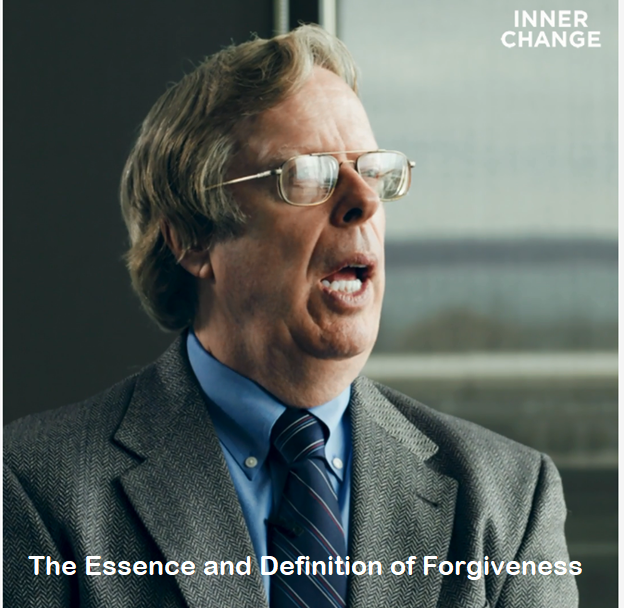
Dr. Robert Enright, founder – International Forgiveness Institute
The Inner Change website includes interviews with psychologists, spiritual teachers, activists, and neurologists. Those interviews are part of the website’s “Peace Video Library” where visitors can “discover what it means to be fully human, what resources we all share, how we can tap into our full potential as humans.” Other website features include musical meditation segments following each video and a collection of more than 30 music videos all with original songs recorded at Chernobyl (the site of the 1986 nuclear power plant disaster) and the nearby ghost town of Prypiat in Northern Ukraine.
Other notable forgiveness-related personalities featured on the site include:
1) Marina Cantacuzino, founder of the Forgiveness Project, a nonprofit that collects and shares stories from both victims/survivors and perpetrators of crime and conflict who have rebuilt their lives following hurt and trauma;
2) Bill Pelke who forgave the young woman who murdered his grandmother by stabbing her 33 times with a butcher knife and who went on to found an organization called Journey of Hope–from violence to healing that provides support to families of murder victims; and,
3) Dr. Andrew Newberg, a physician and neuroscientist who studies the relationship between brain function and various mental states who is also a pioneer in the neurological study of religious and spiritual experiences (a field known as “neurotheology”) as demonstrated in his recent book The Rabbi’s Brain.
In your video of an actual counseling session, you advise the client to see the emotional wounds in her mother. Yet, what if the mother were deceased. How would you proceed with the counseling with regard to this issue of the mother being wounded?
A client still can ascertain the history of emotional woundedness of one’s mother even if the mother is deceased. The client can look back at what is known about the mother’s childhood and adolescence and see if others were unfair and hurtful to her.
It is hard to see the other’s wounds when she wounded me a hundred times more than what she is carrying around. When I try to look at her wounds it makes me frustrated and sad because of all the wasted time and all the hurt created. Will I ever be able to overcome this?
Yes, I truly believe you will overcome this with a determined will. Sometimes we have to fight for our healing and endure with great patience, but never, ever give up. Do not expect too much too soon. The forgiveness journey is just that, a journey and a challenging one at times. Yet, with practice you lessen anger a little more and then a little more until you can see the progress. As you are able, please keep reaching out to the other person as best you can today. Your mercy given to others will come back to you.
Based on a response in 8 Keys to Forgiveness, Chapter 5.
I have done the exercise for your Process Model and I see the stresses that the person was under. Still, this does little for my anger. Yes, I see a wounded and even a weak person, but I still want to punch him for what he did to me. What can you suggest to me so that I am not living with this resentment?
Doing the exercises is not an automatic way out of resentment. It will take time for the resentment to end. I recommend homework for you on a daily basis. Here is that homework: At least twice a day for the next two weeks, please go over the tasks in this exercise, trying to see the person more clearly at the time of the injury. Say to yourself, “I forgive (name) for hurting me at that time when this person was under stress. I will try to be merciful even though I did not receive either justice or mercy.”
Based on a response in 8 Keys to Forgiveness, Chapter 5.