Forgiveness News
FORGIVENESS: The Basic Building Block of Loving Relationships
What comes to mind when you hear someone mention the term “therapy”? Do you envision a patient lying on a couch with a therapist sitting behind and nodding sagely as the patient talks about the shortcomings of his or her life? If so, it’s time to upgrade your thinking.
Thanks to less-than-accurate portrayals in movie and television docudramas, that approach to therapy (known as psychoanalysis) is still dominant in the minds of most individuals. And while it is still practiced, it is in the minority. There are now an estimated 400 different kinds of therapy used by practitioners around the world.
That’s but one of the many mind-altering revelations in a just-published book called Introduction to Psychology by Jorden A. Cummings (Associate Professor) and Lee Sanders (Sessional Lecturer), both in the Department of Psychology at the University of Saskatchewan in Saskatoon, Saskatchewan, Canada. The book offers a comprehensive treatment of core concepts, grounded in classical studies and current/emerging research.
Another major revelation of the new book is its focus on Positive Psychology–the study of happiness. While psychology has traditionally focused on dysfunction–people with mental illness or other issues–and how to treat it, positive psychology, in contrast, is a field that examines how ordinary people can become happier and more fulfilled–in other words, what makes life worth living.
Three Key Strengths
Within positive psychology, three key human strengths have been identified–forgiveness, gratitude and humility. While Introduction to Psychology provides meticulous coverage of those three strengths (Chapter 12.5), this post will focus on forgiveness. Here are excerpts from the book:
Forgiveness is essential to harmonious long-term relationships between individuals, whether between spouses or nations, dyads or collectives. At the level of the individual, forgiveness of self can help one achieve an inner peace as well as peace with others and with God.
“Forgiveness can be an avenue to healing. It is the basic building block of loving relationships with others.”
Introduction to Psychology
Because the potential for conflict is seemingly built into human nature, the prospects for long-term peace may seem faint. Forgiveness offers another way. If the victim can forgive the perpetrator, the relationship may be restored and possibly even saved from termination.
The essence of forgiveness is that it creates a possibility for a relationship to recover from the damage caused by the offending party’s offense. Forgiveness is thus a powerful pro-social process. It can benefit human social life by helping relationships to heal. Culligan (2002) wrote “Forgiveness may ultimately be the most powerful weapon for breaking the dreadful cycle of violence.”
“On a social level, forgiveness may be the critical element needed for world peace.”
Introduction to Psychology
Forgiveness studies demonstrate that self-forgiveness was associated with increased self-esteem, lower levels of anxiety, lower levels of depression and a more positive point of view.
In many of these studies, it was shown that people who are able to forgive are more likely to have better interpersonal functioning and therefore social support. The act of forgiveness can result in less anxiety and depression, better health outcomes, increased coping with stress, and increased closeness to God and others (Enright, 2001). ⊗
ADDENDUM:
Introduction to Psychology has been created from a combination of original content and materials compiled and adapted from several Open Educational Resources (OERs)—teaching, learning and research resources that reside in the public domain or have been released under an intellectual property license that permits their free use and re-purposing.
Compared to commercial textbooks and other commercial resources, OERs are: free to access, free to reuse, free to revise, free to remix, and free to redistribute.
This provides opportunities for instructors and learners to shape course content and meet the needs of specific learning contexts. Teachers and students become learners together, and content becomes a dynamic, always changing category to be engaged rather than a stable set of facts to be mastered.
This is called Open Pedagogy–the practice of engaging with students as creators of information rather than simply consumers of it. This dynamic, often called Open Education, is transforming lifelong learning in the process.
LEARN MORE:
- Click here to download the entire 1,064-page Introduction to Psychology.
- Click her to download other Open Educational Resources and Courses.
- Click here to discover the 10 Types of Psychologists.
- Click here to watch a TED Talk called The New Era of Positive Psychology by Martin Seligman, often called “the founder of Positive Psychology.”
Forgiveness Education: A Modern-Day Strategy That Can Improve Workplace Harmony
Two new research reports have just been published about forgiveness in the workplace and both of them reinforce the findings of a study done more than two years ago by Dr. Robert Enright, founder of the International Forgiveness Institute, and his research team.
That ground-breaking 2017 study, Forgiveness Education in the Workplace: A New Strategy for the Management of Anger, demonstrated the positive role forgiveness can play in reducing anger, resentment, and the desire for revenge among those coping with workplace injustice.
Dr. Enright conducted that study, believed to be the first-ever exploration of forgiveness in the workplace, with UW-Madison researchers Ke Zhao and John Klatt. It was published in the London Journal of Research in Humanities and Social Sciences, a London, UK, peer-reviewed international journal for researchers and scientists.
The two new research reports, both published early in August, indicate that the insights of Dr. Enright’s 2017 workplace project are now gaining a foothold with other researchers. The first, Linking Forgiveness at Work and Negative Affect, was a study involving 376 manufacturing employees in Roorkee, a city in Northern India.
In that study, researchers at the Indian Institute of Technology-Roorkee implemented forgiveness interventions with employees in a control group and their analysis concluded that “forgiveness significantly reduces the NA (negative affect–the experience of negative emotions and poor self-concept) on employees and hence, organizations should make positive interventions in order to encourage forgiveness at work.” They also noted that forgiveness in the workplace is a subject “that has largely been ignored in organizational research.”
The second study, published Aug. 14 in the American Journal of Health Promotion, was titled, Is Forgiveness One of the Secrets to Success? Considering the Costs of Workplace Disharmony and the Benefits of Teaching Employees to Forgive. The research team was led by noted forgiveness researchers Loren Toussaint (Luther College, Decorah, IA) and Frederic Luskin (Stanford University, Palo Alto, CA).
According to their analysis: “Worker well-being and productivity benefit when forgiveness skills are taught.” They also speculate that “Forgiveness might prove to be one of the most commonly overlooked but crucial elements to any organization’s success. Investment in studying, developing, and monitoring forgiveness and its effects may well become a priority for those organizations wishing to succeed in the 21st century.”
Both of those new research reports on forgiveness in the workplace provide strong evidence and reinforcement of what Dr. Enright’s team reported in 2017 that forgiveness education is “a systematic, easily-implemented, and non-threatening way to reduce anger in the workplace.” The team recommended that employers conduct regularly scheduled forgiveness education workshops to help their employees be more content and productive. ♥
Learn more about the significant role of workplace forgiveness education by clicking on any of the research report titles highlighted in this article.
Forgiveness Therapy Provides Quality of Life Benefits to Terminally-Ill Cancer Patients
Dr. Robert Enright and Dr. Richard Fitzgibbons Receive 2019 International Research Award
Two members of the International Forgiveness Institute (IFI) Board of Directors have been selected to receive an international award recognizing their Forgiveness Therapy research. Dr. Robert Enright, founder of the IFI, and Dr. Richard Fitzgibbons, MD, Director of the Institute for Marital Healing just outside Philadelphia, PA, have been named the 2019 recipients of the Expanded Reason Award.
The prestigious award is presented annually by the University Francisco de Vitoria (Madrid, Spain) in collaboration with the Vatican Foundation Joseph Ratzinger/Benedict XVI (Rome, Italy) “to recognize and encourage innovation in scientific research and academic programs.”
Recipients (only two researchers are selected worldwide each year) are determined by an international panel of seven judges who examine books and journal articles to ascertain who across the globe is conducting innovative and exceptional research that cuts across the social sciences. The award criteria includes the challenge of establishing a dialogue of particular sciences with philosophy and theology in line with the thought of Pope Benedict XVI who led the Catholic Church from 2005 – 2013.
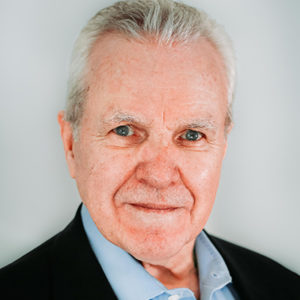
Dr. Richard Fitzgibbons
Drs. Enright and Fitzgibbons co-authored the book Forgiveness Therapy: An Empirical Guide for Resolving Anger and Restoring Hope. The book, published by the American Psychological Association (APA) in 2015, signifies that Forgiveness Therapy is now rightfully taking its place alongside such historically accepted therapies as Psychoanalysis, Humanistic Psychotherapy, and Cognitive Behavioral Therapy.
Forgiveness Therapy is actually a new and updated version of a previous book by Drs. Enright and Fitzgibbons, Helping Clients Forgive, that was published in 2000, also by the APA. The new 358-page volume helps clinicians learn how to recognize when forgiveness is an appropriate client goal and provides concrete methods for working forgiveness into therapy with individuals, couples and families. It is grounded in theology, philosophy, psychiatry, education and the social scientific method.
Dr. Fitzgibbons is a long-time research associate of Dr. Enright’s. Trained in psychiatry, he has worked with hundreds of couples over the past 40 years. His book, Habits for a Healthy  Marriage: A Handbook for Catholic Couples, is available at Amazon.com.

Dr. Robert Enright
Dr. Enright, in addition to founding the IFI 25 years ago, has been a professor with the University of Wisconsin-Madison School of Education’s highly-regarded Department of Educational Psychology since 1978. He is the author or editor of seven books and more than 150 publications on social development and the psychology of forgiveness. He pioneered forgiveness therapy and developed an early intervention to promote forgiveness–the 20-step “Process Model of Forgiving.”
Both Dr. Fitzgibbons and Dr. Enright have been invited to attend and formally accept their awards at the Expanded Reason Awards Ceremony on Sept. 19, 2019 at the University Francisco de Vitoria in Madrid.
The Expanded Reason Awards recognize extraordinary teachers and researchers.
The Awards Ceremony is part of the 3-day International Expanded Reason Congress in Madrid that brings together university researchers and teachers from all over the world. The Congress seeks to deepen the dialogue among science, philosophy, and theology through presentations, roundtable discussions, and workshops. Dr. Fitzgibbons and Dr. Enright will be outlining the concepts behind their winning project in a talk that will also be published in the official proceedings of the Congress.♥
This 3-Year-Old’s Explanation of Forgiveness is Simply Brilliant!
Kids say the darnedest things. But when 3-year-old Holland, the daughter of blogger Mary Katherine Backstrom, explained what “forgiveness” means, she did it in a beautifully heartfelt and simplistic way. And while kids are known for their outlandish statements (seriously — where do they hear these things?!), this little girl happened to be pretty accurate with her definition, single-handedly reminding us all to soften our hearts a little more often.
Backstrom described the evening’s events — which included some pre-bedtime arguing — that led to the moment the 3-year-old took it upon herself to go ahead and be the bigger person and “forgive” her mom:
“My daughter and I just had a knock-down, drag-out bedtime hour,” the mom . “Finally, about ten minutes ago, I put her to bed and through clinched teeth said, ‘I love you, Holland, but not another word tonight. You are going to sleep now. I’m done fussing over stuffed animals.’”
Of course, her daughter had just one more thing to say. The words that came out of her mouth, however, were definitely unexpected.
“‘Mommy,’ my three year old said, staring me down with venom in her tiny voice… ‘I FORGIVE YOU!!!’”:
The mom was surprised to hear this and followed up by asking her daughter if she knew what “forgiveness” meant. Her response proves that this tot is wise beyond her years.
“‘It means you were wrong, and I’m tired of being mad, and now I’m going to sleep and my heart won’t have a tummy ache.’”
The mom ended the post by noting that this was not only a humbling moment for her as a mom, but it could also serve as an important lesson for everyone.
“Tonight I was taught a lesson in forgiveness by a three year old,” the mom wrote. “It was a gut punch, too. And you’re dang right I climbed in that bed and loved on her. Because to be honest, MY heart had a bit of a tummy ache. I was reminded by my toddler to never go to bed in anger. Because when you do, your heart will have a tummy ache. And you know what? I’ve been alive for 35 years, and I’ve got to give it to her: She’s not wrong.”
Psychologists, meanwhile, say that forgiveness is somewhat more of a complicated matter. Psychotherapist Nancy Colier has defined forgiveness as a type of “freedom” in her writings for Psychology Today:
“Forgiveness, ultimately, is about freedom,” she writes. “When we need someone else to change in order for us to be okay, we are a prisoner. In the absence of forgiveness, we’re shackled to anger and resentment, uncomfortably comfortable in our misbelief that non-forgiveness rights the wrongs of the past and keeps the other on the hook.”
She goes on to write that withholding forgiveness — holding out for a change from the other party —can actually leave us powerless.
“What we want from the other, the one we can’t forgive, is most often, love,” she writes. “Forgiveness is ultimately about choosing to offer ourselves love—and with it, freedom.”
Or in other, simpler words, forgiveness is releasing anger so that our hearts don’t have a “tummy ache.” Which, honestly, sounds like the healthiest course of action for all parties.
Well said, Holland. Well said.
 This article was written by Augusta Statz and is reposted, with permission, from the website Simplemost.com. The goal of Simplemost “is to provide women with the news that can impact their lives, along with ideas and tips to help make things just a little easier.”
 Dr. Robert Enright, founder of the International Forgiveness Institute and the man Time magazine called “the forgiveness trailblazer,” has authored more than 60 forgiveness-related blog posts for Psychology Today during the past two years. You can access all of them at this link.