
Forgiveness News
A Podcast and Book on Revenge and Forgiveness

Image by Brett Jordan, Pexels.com
On a recent episode of the podcast No Small Endeavor, Yale University professor Dr. James Kimmel, Jr. talked about his book, The Science of Revenge. The full video is available on YouTube here:
Dr. Enright’s Psychology Today Post for June 2026 Gets Essential Read Status
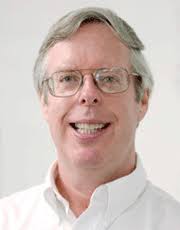
Dr. Robert Enright
An Examination of Forgiveness in the Context of Armed Conflict

Image by Noor Aldin Alwan, Pexels.com
The journal article below examined 30 manuscripts comprising 35 individual studies, published between 2000 and 2024, focused on forgiveness during times of armed conflict. The results were not surprising. In the article’s abstract, the authors concluded: “Facilitating factors [for forgiveness] included acknowledgment of harm, apologies, justice measures, religious and cultural beliefs, and guarantees of non-repetition. Conversely, lack of trust, empathy, and the severity of offenses reduced willingness to forgive.”
In other words, forgiveness seemed to follow the reduction or elimination of the conflict as justice (not forgiveness) was beginning to prevail. As the quotation above makes clear, if trust and empathy are not present and there is severity in the offenses, then a willingness to forgive is less likely.
Turizo-Palencia, Y., Avila Paternina, K. A., De La Hoz Maldonado, A., & Núñez Menco, S. S. (2026). Willingness to forgive in contexts of armed conflict: A systematic review. Acta psychologica, 266, 106764. https://doi.org/10.1016/j.actpsy.2026.106764
A critical issue that did not emerge in the article is this: How can forgiveness start before the quelling of the conflict, before the guarantee of non-repetition, before trust is restored? Forgiveness should not be considered only as a consequence of justice received, but instead as a possible catalyst for changing the situation from unjust to more just or even completely just.
Forgiveness Guidelines for Therapists
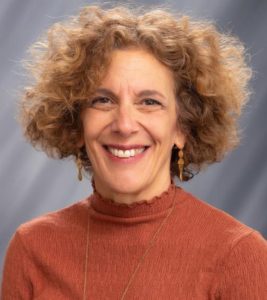
Dr. Suzanne Freedman
A recent essay by Professor Suzanne Freedman of the University of Northern Iowa was published in the Greater Good Magazine of the University of California, Berkeley. The essay is titled “Seven Guidelines for Therapists Helping Clients to Forgive.” It provides helpful information for mental health professionals whose clients want to work on forgiving those who have been unjust to them.
The Struggle to Seek Forgiveness and to Forgive

Image by Hert Niks, Pexels.com
Olympian Sturla Holm Lægreid, who won a bronze medal at the 2026 Winter Olympics, shared his challenge of seeking forgiveness from his girlfriend after he had an affair during the competition. His girlfriend shared her struggle to offer forgiveness. The story can be found on people.com here:
https://people.com/sturla-holm-laegreid-ex-girlfriend-breaks-her-silence-after-affair-confession-2026-winter-olympics-11904252?utm_source=chatgpt.com