
An Examination of Forgiveness in the Context of Armed Conflict
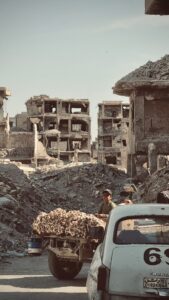
Image by Noor Aldin Alwan, Pexels.com
The journal article below examined 30 manuscripts comprising 35 individual studies, published between 2000 and 2024, focused on forgiveness during times of armed conflict. The results were not surprising. In the article’s abstract, the authors concluded: “Facilitating factors [for forgiveness] included acknowledgment of harm, apologies, justice measures, religious and cultural beliefs, and guarantees of non-repetition. Conversely, lack of trust, empathy, and the severity of offenses reduced willingness to forgive.”
In other words, forgiveness seemed to follow the reduction or elimination of the conflict as justice (not forgiveness) was beginning to prevail. As the quotation above makes clear, if trust and empathy are not present and there is severity in the offenses, then a willingness to forgive is less likely.
Turizo-Palencia, Y., Avila Paternina, K. A., De La Hoz Maldonado, A., & Núñez Menco, S. S. (2026). Willingness to forgive in contexts of armed conflict: A systematic review. Acta psychologica, 266, 106764. https://doi.org/10.1016/j.actpsy.2026.106764
A critical issue that did not emerge in the article is this: How can forgiveness start before the quelling of the conflict, before the guarantee of non-repetition, before trust is restored? Forgiveness should not be considered only as a consequence of justice received, but instead as a possible catalyst for changing the situation from unjust to more just or even completely just.