IFI News
Correcting Forgiveness Misconceptions and Distortions
Misconceptions and distortions are nothing new to most professionals—particularly to the professionals who employ forgiveness interventions and forgiveness therapy. Since the first empirically based study on person-to-person forgiveness was published in the social sciences (Enright et al., 1989), there has been vigorous debate on exactly what forgiveness is and is not.
That debate has generally been positive and helpful in the overall evolution of forgiveness from a simple concept (and primarily a religious credo) to a vitally important mental health approach for many people who have been victimized. At the same time, there still are a few in the mental health professions who are criticizing forgiveness with some good points but also with some errors.
Those who dispense misinformation about forgiveness prevent many individuals from
choosing forgiveness when they could truly benefit from deep emotional recovery.
Dr. Robert Enright
Dr. Enright, co-founder of the International Forgiveness Institute (IFI) and the man labeled “the forgiveness trailblazer” by Time magazine, has been using scientific research methods to study forgiveness for more than 35 years. Whenever he learns about an inaccurate or erroneous premise that is being circulated, he tries to address it head-on. That’s exactly what he did just this week by factually countering an essay published on Feb. 20 in Psychology Today.
The essay, “Why Forgiveness Isn’t Required in Trauma Recovery,” was written by a Chicago psychotherapist who is also a speaker and author. While acknowledging that “I’ve witnessed the benefits of forgiveness for many of my clients,” the author’s main contention is that “forgiveness is potentially problematic when incorporated into trauma treatment.”
While Dr. Enright says he has heard all those erroneous assertions before, he quickly drafted his own essay providing fact-based and true-to-life counter arguments for each of the claims. His goal in doing so, he says, was not to heavily criticize, but instead “to protect the integrity of a genuine process of forgiveness, free of confusions of what forgiveness is and is not.”
Dr. Enright’s critique of the original essay was published on Feb. 26 by Psychology Today. While the publication gave his clarifying discourse the same title as the original Feb. 20 article, it added a significant subtitle, “Why Forgiveness Isn’t Required in Trauma Recovery: Published misconceptions of forgiveness may discourage people from trying it.”
The blog essay by “the father of forgiveness research” (the title bestowed on Dr. Enright by The Christian Science Monitor) provides 5 succinct and factual responses to the original article’s 5 contentions. It also clarifies two points on which he agrees with the article: 1) “forgiveness after unjust behaviors is not necessarily for everyone;” and, 2) “as a moral virtue, forgiveness never ever should be forced onto anyone.”
Dr. Enright is no stranger to Psychology Today. In fact, in the past 5 years he has penned nearly 100 blog essays as part of his own dedicated column for the publication’s website called “The Forgiving Life.” Those blog posts have been accessed online more than a million times–an average of 548 times per day since he began writing them.
According to Dr. Enright, he will continue his efforts to provide information to Psychology Today readers and he will continue to clarify points when there appear to be misunderstandings about forgiveness and forgiveness therapy so that both therapists and clients can make informed decisions.
LEARN MORE:
- Read the original article: “Why Forgiveness Isn’t Required in Trauma Recovery”
- Read Dr. Enright’s critique of that article: “Published Misconceptions of Forgiveness May Discourage People from Trying It”
- View Dr. Enright’s “Top Ten Psychology Today Blogs”
- Access all of Dr. Enright’s “Psychology Today Blogs“
How to Help People in Ukraine Right Now
When Russian President Vladimir Putin met with French President Emmanuel Macron at the Kremlin earlier this month, Mr. Putin recited a crude Russian joke about Sleeping Beauty. Comparing the fairy tale princess to Ukraine, he said, “Whether you like it or not my beauty, you will need to put up with all I do to you.”
When he later was told about the malicious remark, Ukrainian President Volodymyr Zelensky responded to Mr. Putin by saying, “Ukraine is indeed a beauty but she’s not yours.” (Source: Time Magazine)
As the Russian invasion of Ukraine continues, people around the world are seeking ways to help those in Ukraine being impacted by the destruction and those fleeing the country to try to stay alive. An article in yesterday’s online Time Magazine provides some real possibilities.
The article is titled “Here’s What You Can Do to Help People in Ukraine Right Now.” It outlines simple steps anyone can take to help, provides links to several international aid organizations, and lists half a dozen Ukrainian and US nonprofits that are providing humanitarian aid to Ukraine.
Read more:
Forgiveness as a Missing Piece to Peace Between Ukraine and Russia, (Dr. Enright’s latest blog in Psychology Today)
Another list of Ukraine aid organizations (PBS radio station KQED, California)
Photographs of Ukraine Under Attack (Time Magazine)
The Ukraine Invasion – Explained (NPR)
Mapping and Tracking Russia’s Invasion of Ukraine (USA Today)
Forgiveness Education for Students in Nursing Program Helps Reduce Anxiety and Depression
A research study published last month, utilizing Dr. Robert Enright’s forgiveness intervention model, showed that students in college nursing programs would benefit from a forgiveness intervention in the areas of self-care and forgiveness facilitation.
The nursing students, randomly assigned to either an experimental group or a no-contact control group, used Dr. Enright’s book 8 Keys to Forgiveness as the project’s treatment manual. After studying one chapter a week for 8 weeks, the students in the experimental group showed greater improvement in forgiveness compared to those in the control group from the pretest to the posttest which was maintained at the four-week follow-up. In addition, those in the experimental group showed statistically significant decreases in anxiety, depression, and fatigue from pre-testing to both post-testing and follow-up testing periods.
The study was conducted by a team of 8 researchers from the Liberty University School of Nursing (Lynchburg, VA) under the direction of Jichan J. Kim, Associate Professor of Psychology at Liberty. Dr. Kim has been the lead investigator on more than a dozen forgiveness-related studies over the past several years.
This latest study, The Efficacy of a Forgiveness Bibliotherapy: A Randomized Controlled Trial with Nursing Students, was published in the Journal of Holistic Nursing (JHN) on Jan. 10, 2022. JHN is a peer-reviewed quarterly journal with a focus on advancing the science and practice of holistic nursing and healthcare.
“The need for forgiveness education for nursing students has risen dramatically as responsibilities have broadened for nursing professionals,” according to Dr. Kim. “Our study positively demonstrated that the use of bibliotherapy can be a cost-effective way to promote the virtue of forgiveness for nursing students who are likely to be in need of exercising self-care and would have opportunities to facilitate forgiveness for their patients.”
Bibliotherapy, Dr. Kim explained, is a therapeutic approach that uses literature (in this case Dr. Enright’s 8 Keys to Forgiveness) to support good mental health. This study, he added, demonstrated not only the effects of forgiveness, as numerous studies have done in the past, but also the feasibility of using a forgiveness bibliotherapy that can be easily adopted into the existing nursing curriculum.
That same approach has been used by Dr. Enright, co-founder of the International Forgiveness Institute (IFI) and the man Time magazine calls “the forgiveness trailblazer,” in a slightly different format over the past two years. Dr. Enright has worked with Dr. Chontay Taylor Glenn, PhD, RN, PMHNP-BC, to enroll a total of eight University of Michigan-Flint nursing students in the IFI’s Forgiveness Therapy training course.
Dr. Glenn is Assistant Professor & Project Director of the Psychiatric Mental Health Nurse Practitioner Residency Program at UM-Flint. In addition to incorporating the IFI’s forgiveness training into the curricula for her nursing students, she also developed a program through which nine Flint-area community counselors completed the Forgiveness Therapy online continuing education course. Dr. Kim provided three hour-long training sessions by Zoom as part of that collaborative effort between Dr. Glenn, Dr. Enright, and himself.
The newly trained counselors in Flint are also undertaking an expanded role in their community, according to Dr. Glenn–providing forgiveness education classes and case coordination to Flint-area adolescents who have experienced adverse childhood experiences. The project is funded by a grant from the W.K. Kellogg Foundation in Battle Creek, MI.
About Dr. Kim

Dr. Jichan J. Kim
Jichan J. Kim is an Associate Professor of Psychology and the Director of the M.A. in Applied Psychology program at Liberty University, Lynchburg, VA. His research interests include the effects of interpersonal and intrapersonal forgiveness as well as the integration of psychology and Christianity.
Dr. Kim has degrees from the University of Wisconsin-Madison (M.S. & Ph.D.), Harvard University (Ed.M.), Gordon-Conwell Theological Seminary (M.Div. & M.A.), and City College of New York (B.A.). He also has extensive ministry experience in New York City, Boston, and Madison (WI), serving various age groups in Korean immigrant congregations.
Learn More:
- Nursing Students Research Report Abstract
- Bibliotherapy Defined
- Overview of the IFI’s Forgiveness Therapy Course
Forgiveness Education in Greek Schools Expands with IFI – University Collaboration
More than 3,000 grade school students in Greece are learning how to reduce their anger, increase cooperation, gain resilience, and transform their traumas into personal character strengths through Forgiveness Education classes during this 2021-2022 school year.
“Trauma Transformation Through Forgiveness Education” is a social-emotional learning (SEL) program developed by Dr. Peli Galiti, Ph.D., M.Ed., research scholar at the University of Wisconsin – Madison. Dr. Galiti, a native of Athens, is also Director of the Greek Forgiveness Education Program (GFEP) started in 2014 by the Madison-based International Forgiveness Institute (IFI).
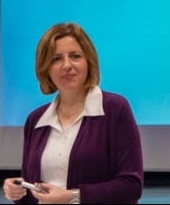
Dr. Peli Galliti, Ph.D., M.Ed.
“This one-of-a-kind program is based on the educational research studies conducted by Dr. Robert Enright who pioneered the field of Forgiveness Education,” says Dr. Galiti. “His studies have demonstrated that Forgiveness Education classes help students reduce in anger and hostile attribution, increase in empathy, and actually result in improved grades.”
Dr. Enright is a UW-Madison educational psychology professor who co-founded the International Forgiveness Institute in 1994. He has developed comprehensive Forgiveness Education curricula for students in grades K-4 through 12th that are now being used in more than 30 countries around the world.
According to Dr. Galiti, the new program is actually a collaboration between the IFI, UW-Madison, and two Greek universities—the Aristotle University of Thessaloniki and the National and Kapodistrian University of Athens (where Dr. Galiti previously lectured). Funding is provided by the Athens-based Stavros Niarchos Foundation, one of the world’s leading private, international philanthropic organizations. The program also has the endorsement of the Greek Ministry of Education.
Dr. Galiti began implementation of the Trauma Transformation program last September by leading a series of Forgiveness Education workshops for 110 Greek teachers. Those teachers are delivering the forgiveness classes this semester at schools in four Greek cities–Athens, Larisa, Patra, and Thessaloniki.
That training focused on techniques and methods the teachers could use to help their students manage traumatic experiences and any personal or relational difficulties that might cause harm and pain. Thematic instructional units included:
- Forgiveness Education theory and principles.
- Why forgiveness is necessary and how it is applied in the school environment.
- Theories about trauma and its treatment.
- Transformation and wound healing through Forgiveness Education.
- Collaboration in the classroom and conflict resolution.
- The experience of Forgiveness Education in Greek schools: Best Practices and Case Studies.
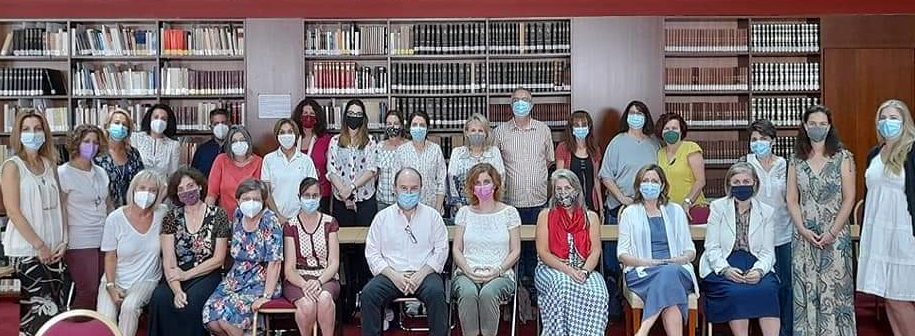
These grade school teachers in Athens were among the 110 teachers who received Forgiveness Education training conducted by Dr. Peli Galiti as part of the collaborative effort between the University of Wisconsin-Madison and the University of Thessaloniki.
The collaborative training efforts for this Forgiveness Education program have received support and major funding through the Greek Diaspora Fellowship Program that is designed to help avert Greece’s brain drain and develop long-term, mutually beneficial collaborations between universities in Greece, the United States, Canada, South Africa and Australia. The Fellowship Program is managed by the Institute of International Education in collaboration with the Fulbright Foundation in Greece, and funded by the Stavros Niarchos Foundation.
In 2017, Dr. Galiti was one of 30 Greek- and Cypriot-born scholars representing 28 prominent United States and Canadian universities who traveled to Greece to conduct academic projects with their peers at Greek universities as part of the Greek Diaspora Fellowship Program. As part of her fellowship, Dr. Galiti hosted workshops about Restorative Justice and Forgiveness Education, along with conducting research about bullying prevention and class collaboration.
- Visit the Greek Forgiveness Education Program website.
- Watch a 4 min. 12 sec. video about the Greek program: Learning to Forgive.
- Read more about Dr. Galiti’s eductional work in Greece.
- Watch a video webinar on Greek Forgiveness Education featuring presentations by Dr. Galiti and Dr. Enright.
About the Stavros Niarchos Foundation:
The Stavros Niarchos Foundation (SNF) (www.SNF.org), is one of the world’s leading private, international philanthropic organizations, making grants in the areas of arts and culture, education, health and sports, and social welfare. Since 1996, SNF has committed more than $3.3 billion through 5,100 grants to nonprofit organizations in 135 countries around the world.
The Foundation funds organizations and projects that are expected to achieve a broad, lasting and positive impact for society at large, and exhibit  strong leadership and sound management. The Foundation also supports projects that facilitate the formation of public-private partnerships as an effective means for serving public welfare. In addition to its standard grants, the SNF has continued to respond to the urgent needs of Greek society, by providing relief against the severe effects of the socioeconomic crisis through three major grant initiatives of $378 million.
Dr. Enright’s Forgiveness Essays Reach One Million Views
What is the first thing that comes to mind when you hear the phrase “one million?”
- One million dollars?
- One million stars in the sky?
- One million pebbles of sand on a beach?
For Dr. Robert Enright, the psychologist who is often called “the father of forgiveness research,” the term one million gained a new significance recently when he learned that the blog column he writes for Psychology Today has surpassed one million views.
“When I first began studying forgiveness 36-years ago, it was extremely difficult to find even one single academic article on the subject,” says Dr. Enright. “The fact that my blog essays have been read more than one million times during the past few years is an extraordinary story of how important forgiveness has become in our lives.”
Appropriately called “The Forgiving Life,” (the same title as one of Dr. Enright’s most popular books), the Psychology Today column authored by Dr. Enright focuses on how forgiveness benefits individual, family, and community health. At the publication’s request, Dr. Enright wrote his first Psychology Today forgiveness essay in December 2016. Since then, he has written 93 blog entries as part of the series, all of which are available on the publication’s website.
Dr. Enright’s Psychology Today blogs have been accessed online an average of
548 times per day since he began writing them.
Here is a list of 10 of Dr. Enright’s most popular Psychology Today blogs (with hyperlinks to the actual articles):
- Afraid of Mingling with the Relatives This Holiday Season?
- A Message for All Who Bristle at the Idea of Forgiving
- How Forgiving Are You? Take the Forgiveness Test
- 6 Things to Consider Before Reconciling with an Ex
- Whom Do I Forgive in the COVID-19 Crisis?
- Finding True Love: 7 Questions to Ask Your Potential Partner
- Are Some Acts Completely Unforgiveable?
- Why Forgiveness Is Heroic
- Five Forgiveness Exercises for Couples
- Why We Need Forgiveness Education
“My Psychology Today essays are designed to pose a challenge to everyone who reads them,” Dr. Enright says. “I want readers to consider whether they can incorporate forgiveness into their everyday interactions so that they can become more compassionate while at the same time becoming healthier. I call it becoming forgivingly fit.”
You can access all 93 of Dr. Enright’s Psychology Today blogs at The Forgiving Life.
According to the website’s Author Profile page:
Robert Enright, Ph.D., is a professor of educational psychology at the University of Wisconsin-Madison, a licensed psychologist, and the founding board member of the International Forgiveness Institute, Inc., who pioneered the social scientific study of forgiveness. He is the author of over 120 publications, including seven books: Exploring Forgiveness, Helping Clients Forgive, Forgiveness Is a Choice, Rising Above the Storm Clouds (for children), The Forgiving Life, 8 Keys to Forgiveness, and Forgiveness Therapy. His colleagues and he have developed and tested a pathway to forgiveness, called Forgiveness Therapy, that has helped incest survivors, people in drug rehabilitation, in hospice, in shelters for abused women, and in cardiac units of hospitals, among others. Enright has developed Forgiveness Education programs for teachers in Belfast, Northern Ireland, Athens, Greece, Liberia, Africa, and Galilee, Israel.